Tuesday, October 2, 2018

Archaeologists unearth Roman road in Netherlands

The dig is metres away from a main road
OMROEP WEST

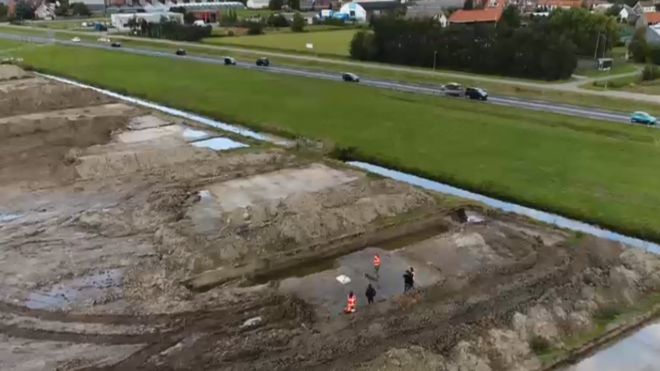
Archaeologists in the Netherlands have discovered a 2,000-year-old stretch of Roman road and the remains of a Roman village at the town of Katwijk, which once marked the northern boundary of the Roman Empire.

The road is 125 metres (410 ft) long and lies close to a busy highway in the Valkenburg suburb. The Roman village comes complete with a canal and burial ground, the Omroep West regional broadcaster reports.

South Holland Province asked archaeologists to examine the whole area where the new RijnlandRoute bypass is to run, aware of the local Roman legacy and anxious to preserve any finds.

The Emperor Claudius built the city of Lugdunum Batavorum at the mouth of the Old Rhine River, which still flows through Katwijk, and ships would sail from there for Britain. But no one expected to find such well-preserved remains in Katwijk itself.

Read the rest of this article...

Monday, August 6, 2018

'Spectacular' ancient public library discovered in Germany

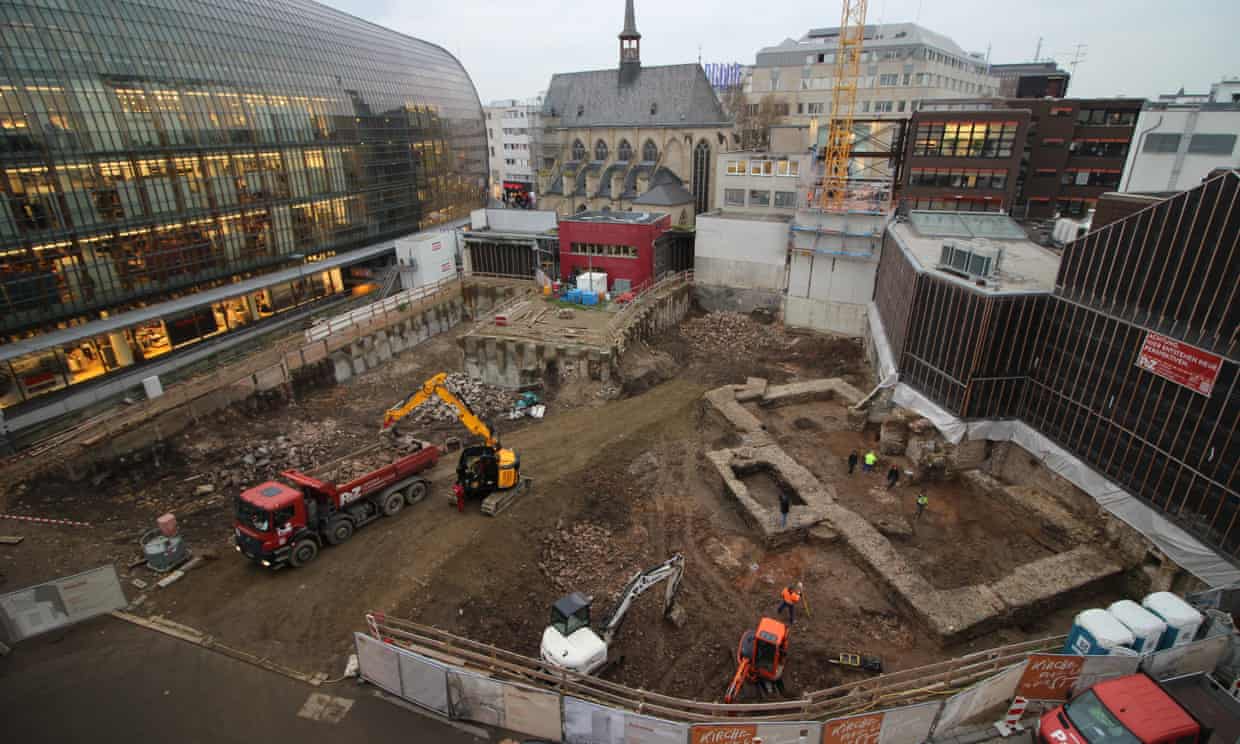
‘Really incredible’ … the site of the second-century library discovered in Cologne. Photograph: Hi-flyFoto/Roman-Germanic Museum of Cologne

The remains of the oldest public library in Germany, a building erected almost two millennia ago that may have housed up to 20,000 scrolls, have been discovered in the middle of Cologne.

The walls were first uncovered in 2017, during an excavation on the grounds of a Protestant church in the centre of the city. Archaeologists knew they were of Roman origins, with Cologne being one of Germany’s oldest cities, founded by the Romans in 50 AD under the name Colonia. But the discovery of niches in the walls, measuring approximately 80cm by 50cm, was, initially, mystifying.

“It took us some time to match up the parallels – we could see the niches were too small to bear statues inside. But what they are are kind of cupboards for the scrolls,” said Dr Dirk Schmitz from the Roman-Germanic Museum of Cologne. “They are very particular to libraries – you can see the same ones in the library at Ephesus.”

Read the rest of this article...

Ancient Roman Library Discovered Beneath German City

The excavation of the ancient library in Cologne, Germany.
Credit: Roman-Germanic Museum of Cologne

Beneath the soil in Cologne, Germany, lies a bibliophile's dream: an ancient Roman library that once held up to 20,000 scrolls, according to news reports.

Archaeologists discovered the epic structure in 2017 while they were excavating the grounds of a Protestant church to build a new community center. Considering Cologne is one of Germany's oldest cities, founded in A.D. 50, it's no surprise that it still has structures dating back to Roman times.

However, archaeologists didn't figure out that the structure was a library until they found mysterious holes in the walls, each measuring about 31 inches by 20 inches (80 by 50 centimeters), The Guardian reported.

Read the rest of this article...

Thursday, July 19, 2018

Archaeologists find remains of 'ancient church' on banks of Tiber in Rome


Archaeologists have been left at a loss by the discovery of some mysterious ruins in Rome, which could be the remains of one of the city's earliest churches.

The find was made at Ponte Milvio, a bridge along the River Tiber in the northern part of the city. And it came about completely by chance while electrical technicians, who were laying cables along the site, uncovered remains of buildings dating back to between the first and fourth century AD.

Rome's Archaeological Superintendency called the discovery "an archaeological enigma shrouded in mystery".

Read the rest of this article...

Roman coins discovered at Apsaros in Georgia

The coins were discovered by a Polish-Georgian team of archaeologists conducting 
excavations in Apsaros [Credit: fb/Gonio - Apsaros Fortress]

Bronze and silver Roman coins have been discovered by a Polish-Georgian team of archaeologists conducting excavations in the Roman fort of Apsaros Georgia. According to the discoverers, this could be a small part of a larger treasure.

The oldest coins in the find were minted during the reign of Hadrian (117-138 AD); the youngest come from the last years of the reign of Septimius Severus (beginning of the 3rd century AD).

"All coins were found very close to each other in the Roman fort Apsaros", said Dr. Radosław Karasiewicz-Szczypiorski from the Institute of Archaeology of the University of Warsaw, project leader from the Polish side. The Georgian side is led by Prof. Shota Mamuladze from the Batumi Shota Rustaveli State University and the Gonio-Apsaros Museum and Reserve.

Polish and Georgian researchers will search for more coins. The excavation season will continue until the end of July. According to the numismatics expert of the expedition, Dr. Piotr Jaworski from the Institute of Archaeology of the University of Warsaw, the coins might be a small part of a larger treasure. It could be scattered as a result of later earthworks and construction works in the fort. After the Romans, Byzantine, Ottoman and even Soviet garrisons were also stationed in the fort.

Read the rest of this article...
Romans had whaling industry, archaeological excavation suggests

North Atlantic right whales, off Grand Manan Island in Canada. Photograph: Alamy

Ancient bones found around the Strait of Gibraltar suggest that the Romans might have had a thriving whaling industry, researchers have claimed.
The bones, dating to the first few centuries AD or earlier, belong to grey whales and North Atlantic right whales – coastal migratory species that are no longer found in European waters.
Researchers say this not only suggests these whales might have been common around the entrance to the Mediterranean in Roman times, but that Romans might have hunted them.
They add that Romans would not have had the technology to hunt whale species found in the region today - sperm or fin whales which live further out at sea - meaning evidence of whaling might not have been something archaeologists and historians were looking out for.

Read the rest of this article...
Thursday, July 5, 2018

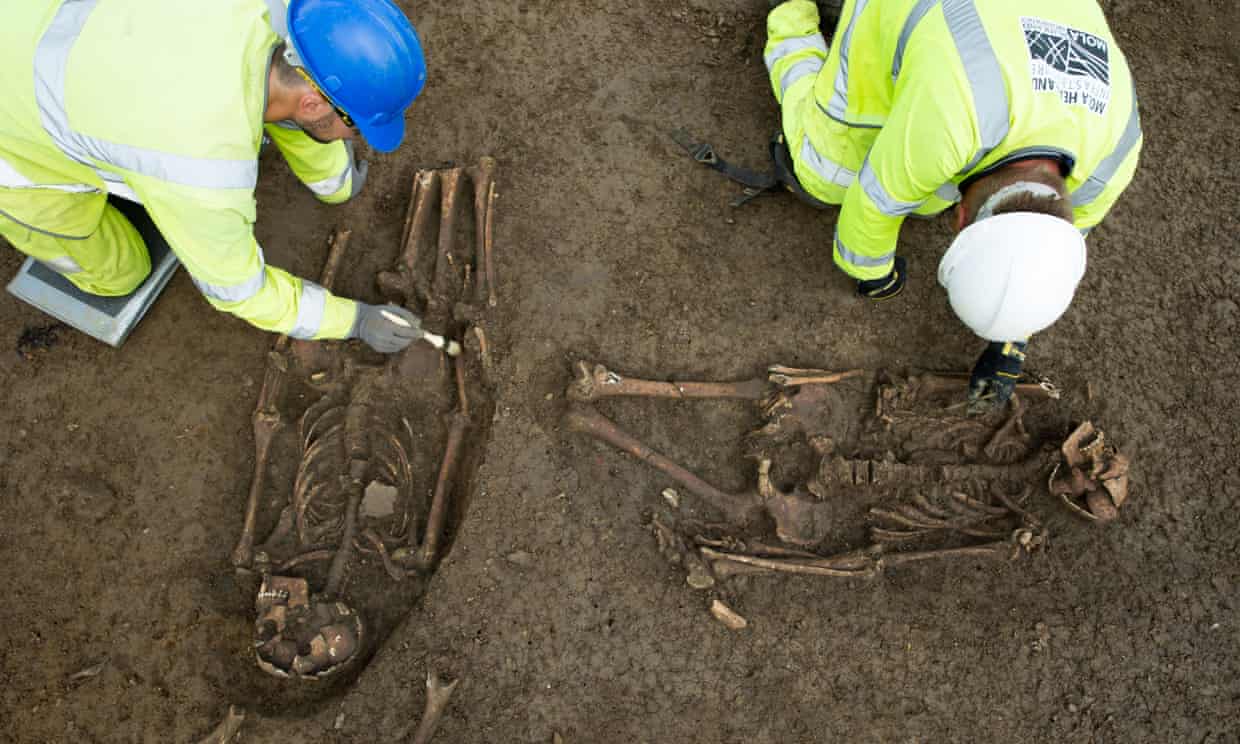
Lincoln Developers Stumble Across Roman Burials


Three perfectly-preserved Roman skeletons, believed to be part of the same burial ground where 23 skeletons were unearthed in a 2015 dig, have been discovered at the site of a new student accommodation development in Lincoln.

They were unearthed at the former site of the Taste Of Marrakesh restaurant in the city centre where a development of 400 student flats is to be built. Among the discoveries were some from the Medieval era - including cellars, wells and a bone ice skate.

Network Archaeology and city archaeologist Alastair Macintosh have spent a month on the dig in collaboration with developer Jackson & Jackson.

Read the rest of this article...
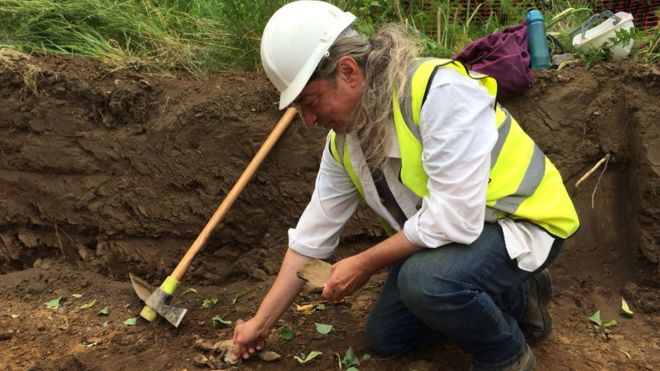
Ancient Roman ‘hand of god’ discovered near Hadrian’s Wall sheds light on biggest combat operation ever in UK

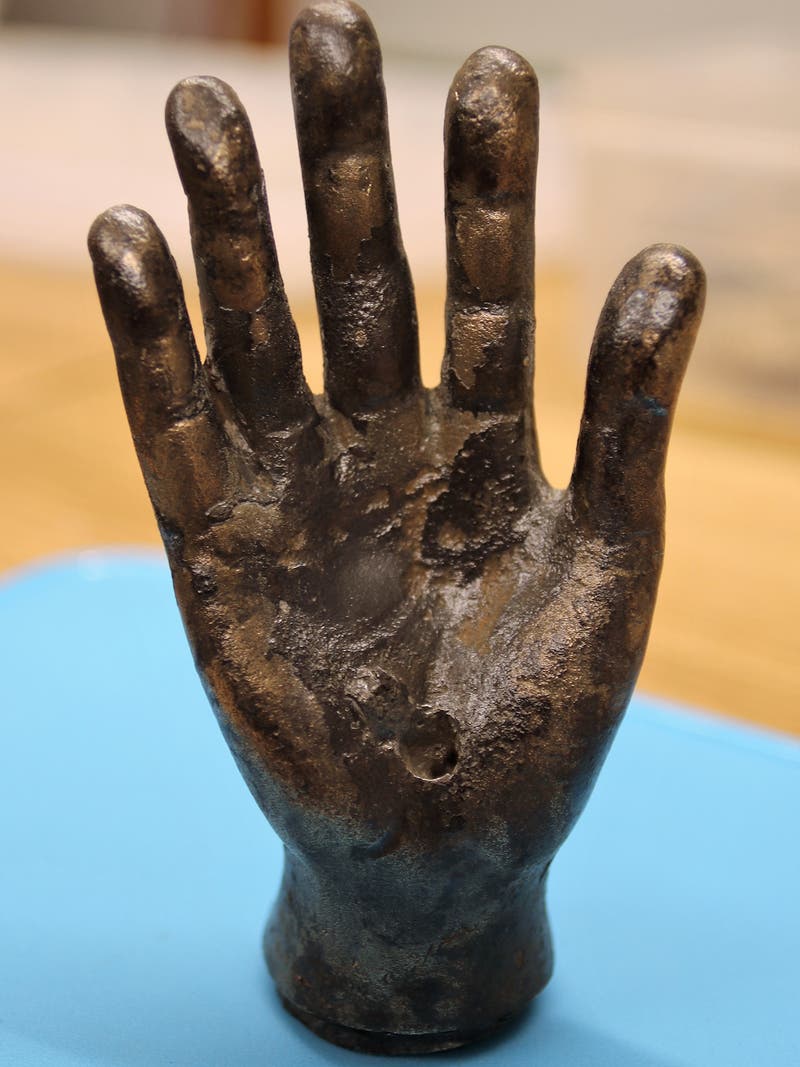
It is likely that the hand was ritually buried by one of the Roman commanders who took part in the conflict (Vindolanda Trust)

Archaeologists have discovered an ancient Roman “hand of god” – but the story it tells is tragically anything but heavenly.

The hand – unearthed near Hadrian’s Wall and made of 2.3 kilos of solid bronze – was almost certainly a gift to a military deity for giving the Romans victory in the largest military combat operation ever carried out in Britain, before or since.

The operation – a relatively little-known Roman invasion of Scotland in 209-210 AD – was also probably one of the bloodiest events in British history.

Read the rest of this article...

Wednesday, June 20, 2018

Archaeologists in Cambridgeshire find graves of two men with legs chopped off

‘Somebody really, really didn’t like these guys,’ says Jonathan House, archaeologist with the Mola Headland Infrastructure team. 
Photograph: Highways England, courtesy of Mola Headland Infrastructure

Exclusive: men believed to be from late Roman or early Saxon period were found in pit being used as rubbish dump

The graves of two men whose legs were chopped off at the knees and placed carefully by their shoulders before burial have been discovered by archaeologists working on a huge linear site in advance of roadworks in Cambridgeshire.

The best scenario the archaeologists can hope for is that the unfortunate men were dead when their legs were mutilated. It also appears their skulls were smashed in, although that could be later damage.

“Was it to keep them in their graves and stop them from running away?” said Kasia Gdaniec, the senior archaeologist with Cambridge county council. “Or had they tried to run away and was this a punishment – and a warning to everyone else not even to think of it?”

Read the rest of this article...

Monday, June 18, 2018

Bedfordshire's first Roman town wall unearthed in Sandy

Items discovered by Les Capon and his team include the skeleton of a woman, a funeral pyre, Roman rubbish and a pottery kiln

Archaeologists excavating a former allotment site in a market town have made the "absolutely brilliant" find of a previously-unknown Roman wall.

The dig in Sandy, Bedfordshire, has uncovered about 200 items dating from the Iron Age in 500 BC to the Saxon period in 800 AD.

Among the finds is the remains of a Saxon house.

The site, in Stratford Road, is to be turned into a cemetery, car park and council depot.

Read the rest of this article...

Wednesday, June 13, 2018

Imperial Roman villa found near Milvian Bridge

Credit: ANSA

An Imperial Roman villa has been found along the banks of the Tiber near the Milvian Bridge, archaeologists said Tuesday.
Digs have uncovered a large floor area in 'opus sectile', decorated with "extraordinary" multicoloured marble floral motifs, they said.

The beauty of the floor has led experts to believe that the rest of the building was full of precious decorations.

The villa's setting so close to the river is unusual, archaeologists said.

Read the rest of this article...

MISE AU JOUR D’UNE VILLA DE L’ANTIQUITÉ


À Vire (Calvados), l’Inrap conduit depuis la fin du mois de février 2018 une fouille d’envergure, sur prescription de l’Etat (Drac Normandie). Cette opération s’inscrit dans le cadre de l’extension du Parc d’activités La Papillonnière menée par la communauté de communes Intercom de la Vire au Noireau.

Les recherches d’une équipe d’archéologues ont permis de mettre au jour les vestiges d’une villa gallo-romaine occupée du Ier au IIIe siècle de notre ère. Ils témoignent de la richesse de son propriétaire. À l’ouest de la villa, le site livre également les vestiges d’une occupation plus tardive, entre les VIIe et Xe siècles.

Read the rest of this article...

Tuesday, June 5, 2018

How Jesus Died: Rare Evidence of Roman Crucifixion Found

This cross was erected inside the Roman Colosseum as a monument to the suffering of early Christians in Rome. The Christian Bible describes the crucifixion of Jesus Christ as occurring in Jerusalem under Roman rule at the beginning of the Christian era.
Credit: Jared I. Lenz Photography/Getty

The body of a man buried in northern Italy 2,000 years ago shows signs that he died after being nailed to a wooden cross, the method used for the execution of Jesus described in the Christian Bible.
Although crucifixion was a common form of capital punishment for criminals and slaves in ancient Roman times, the new finding is only the second time that direct archaeological evidence of it has been found.
A new study of the skeletal remains of the man, found near Venice in 2007, reveals a lesion and unhealed fracture on one of the heel bones that suggests his feet had been nailed to a cross. 
Read the rest of this article...

Roman Tomb Unearthed; to Everyone’s Surprise, It’s Intact

Some of the funerary wares found in a chamber tomb near Rome.CreditRomano D'Agostino, Special Superintendence for Rome

ROME — Sometimes the most extraordinary finds occur by sheer luck.
At least that was the case of a fourth century B.C. chamber tomb that came to light five weeks ago during the construction of an aqueduct in a Rome suburb, when an earthmover accidentally opened a hole in the side of the chamber.
“Had the machine dug just four inches to the left, we would have never found the tomb,” Francesco Prosperetti, Rome’s special superintendent with archaeological oversight, told reporters on Friday. The tomb contained the remains of four occupants — three men and a woman — and funerary wares.
Read the rest of this article...

Monday, May 7, 2018

Roman relics found in Rhine region show evidence of bloody uprising


One of the ancient Roman helmets found in the recent excavation in Krefeld. Photo: DPA

In the North Rhine-Westphalian town of Krefeld, a recent archaeological dig revealed thousands of ancient relics. These finds tell the story of the region’s turbulent Roman history.
Tens of thousands of artefacts were dug out of sand and clay near the Rhine, archaeologists in Krefeld announced in April.

A recent 10-month excavation along the Rhine revealed a wealth of previously-unseen Roman ruins, including hundreds of coins, weapons, horse skeletons, jewellery, helmets, and the artfully decorated belt buckle of a soldier. Packed in boxes, the relics span over 75 cubic metres. 

In the small town just outside Düsseldorf, nearly 6,500 graves were found dating from between 800 BC and 800 AD, which often contained valuable burial objects. It is one of the largest ancient cemeteries north of the Alps. 

Read the rest of this article...
Thursday, April 26, 2018

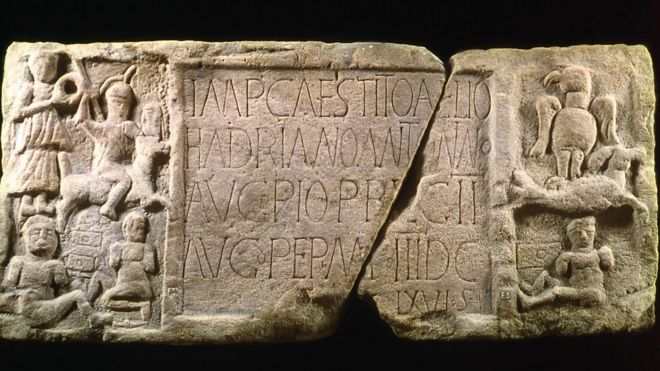
Skeleton of child trying to shelter from Vesuvius eruption uncovered in Pompeii

The skeleton of the child, thought to be aged seven or eight, found at Pompeii

Archeologists in Pompeii have discovered the skeleton of a child who tried in vain to hide from the cataclysmic eruption of Mt Vesuvius nearly 2,000 years ago.

It is the first time in about 50 years that a child’s skeleton has been found in the remains of the ancient Roman city, which lies just south of Naples and was destroyed in AD79.

The child, believed to be seven or eight years old, apparently took refuge in a public baths complex after the volcano erupted and started spewing ash and pumice into the air.

But the building could not save the terrified youngster from the effects of the eruption, which was witnessed by Pliny the Younger.

It is believed that he or she was not killed by falling debris, but instead suffocated by the clouds of scorching ash that enveloped the city, a thriving port on the Bay of Naples.

Read the rest of this article...
The biggest status symbol in the Nordic Iron Age was a goose

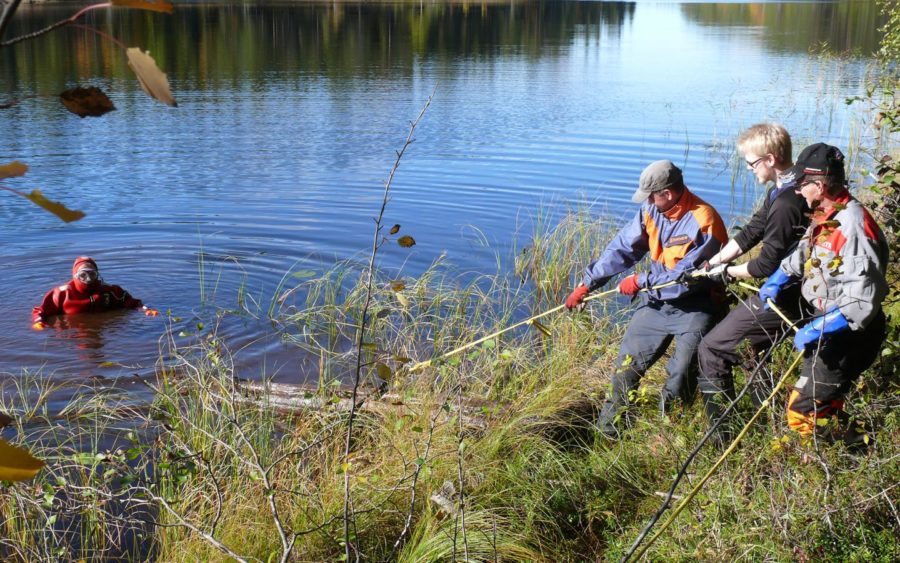
A woman buried with a sheep is typical of the graves throughout the Roman Iron Age (in the Nordic countries). Other animal species (including sheep) are found in younger periods and demonstrate Roman influence. (Photo: Kroppedal Museum)

Forget about Gucci bags, gold jewellery, and fast cars. In the Nordic Roman Iron Age, the best status symbol was a goose. Alternatively a hen.

That is the conclusion made by Danish scientists after studying almost 100 graves from the Early and Late Roman Iron Age (1-375 CE).

They further posit that the Roman influence led to a significant shift in the way in which Scandinavians buried their dead.

One of the changes was the custom of burying people with different species of animals – and the newly introduced hens and geese were especially high-ranking status symbols.

“We don’t have these kinds of poultry before Christ, so it is clearly associated with the Roman life and Roman status. In the Roman Empire, hens and geese were a common burial gift, while in Denmark they were new and exotic species,” says Anne Birgitte Gotfredsen from the Natural History Museum of Denmark at the University of Copenhagen.

Read the rest of this article...
Monday, April 23, 2018

Colourful past of Scotland's Roman wall

THE HUNTERIAN/ UNIVERSITY OF GLASGOW
The Summerston distance stone from the Antonine Wall, which was found near Bearsden, was one artefact successfully tested for pigment

Parts of the Roman Empire's most north western frontier were likely to have been painted in bright colours, new research has found.

The Antonine Wall was built across central Scotland from Old Kilpatrick in the west to Bridgeness in the east.

Now an expert at Glasgow University has used cutting edge technology to examine the remnants of the structure.

And archaeologist Louisa Campbell has found that "distance stones" were painted vibrant red and yellow.

She said the coloured stones were used by the Romans to demonstrate their power over local people.

"The public are accustomed to seeing these sculptures in bland greys, creams, white (for marble) and don't get the full impact that they would have had on the Roman and indigenous audiences 2,.000 years ago," she added.

Read the rest of this article...

Monday, April 16, 2018

Unusual climate during Roman times plunged Eurasia into hunger and disease


UNIVERSITY OF HELSINKI—A recent study published in an esteemed academic journal indicates that volcanic eruptions in the mid 500s resulted in an unusually gloomy and cold period. A joint research project of the Chronology Laboratory of the Finnish Museum of Natural History and Natural Resources Institute Finland (Luke) suggests that the years 536 and 541-544 CE were very difficult for many people.

An extended period of little light may make it difficult for humans to survive. The level of production of plants is dependent on the amount of available sunlight. Food production, i.e, farming and animal husbandry, rely on the same solar energy. Humans, meanwhile, become more prone to disease if they are not exposed to enough sunlight to produce vitamin D.

“Our research shows that the climate anomaly, which covered all of the northern hemisphere, was the compound result of several volcanic eruptions,” says Markku Oinonen, director of the Chronology Laboratory.

The aerosols that were released into the atmosphere with the eruptions covered the sun for a long time.

Read the rest of this article...

Friday, March 30, 2018

Anglo-Saxon settlement and Roman army camp found in A14 bypass dig

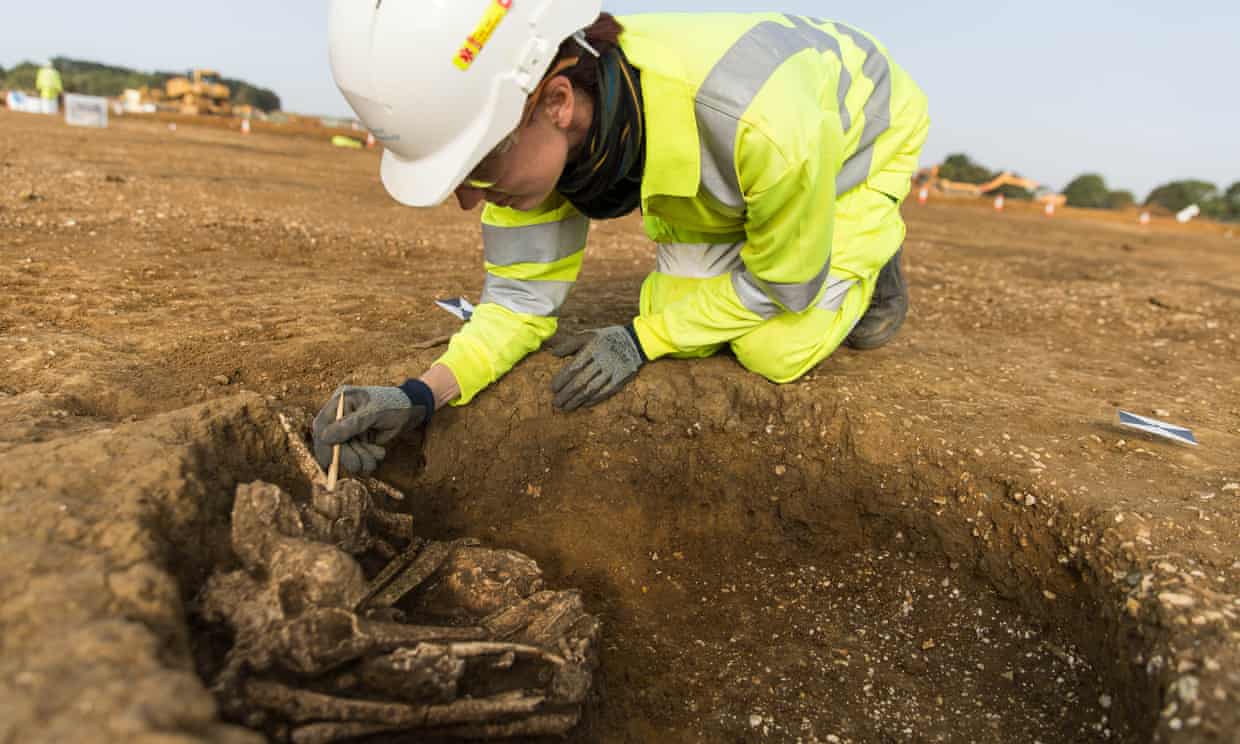
An archaeologist excavates a skeleton in Cambridgeshire. Photograph: Highways 
England/MOLA Headland Infrastructure

It’s taken more than 700 years, but the medieval villagers of Houghton in Cambridgeshire have had the last laugh: the foundations of their houses and workshops have been exposed again, as roadworks carve up the landscape they were forced to abandon when their woodlands were walled off into a royal hunting forest.

Their lost village has been rediscovered in an epic excavation employing more than 200 archaeologists, working across scores of sites on a 21-mile stretch of flat Cambridgeshire countryside, the route of the upgraded A14 and the Huntingdon bypass.

Much of it is now flat and rather featureless farmland, but the excavations have revealed how densely populated it was in the past, with scores of village sites, burial mounds, henges, trackways, industrial sites including pottery kilns and a Roman distribution centre. The archaeologists also found an Anglo-Saxon tribal boundary site with huge ditches, a gated entrance and a beacon on a hill that still overlooks the whole region.

Read the rest of this article...

Tuesday, March 27, 2018

New Pompeii excavations a revelation


ANSA) - Naples, March 23 - Major new finds have been unveiled for Friday's 270th anniversary of the discovery of the first remains of the ancient city of Pompeii buried by ash and rock following the eruption of Vesuvius in 79 AD.

    The local archaeological authorities have marked the occasion by presenting major new excavations in the Regio V area launched under the auspices of the ongoing conservation project Great Pompeii. "Our aim was to resolve the instability of the excavation fronts in this area, which had a history of collapses," said special superintendent for Pompeii Massimo Osanna. "The work involved the reshaping of this part of the archaeological site. Then when we started digging we found remains of public and private areas, gardens and porticoes that we did not think we would find. It is the most important dig in the post-war period," he continued.

Read the rest of this article...

LES FOUILLES DES JARDINS DE LA CATHÉDRALE DU MANS


Depuis septembre 2017, une équipe d’archéologues de l’Inrap fouille, sur prescription de l’Etat (Drac Pays de la Loire), les abords du chevet gothique de la cathédrale Saint-Julien, au Mans. En effet, l’aménagement des jardins, programmé par la mairie, est l’occasion d’ouvrir une fenêtre de plus de 2 000 m² sur le passé de la ville. Celle-ci révèle deux mille ans d’histoire débutant dès les premiers temps de Vindinum, chef-lieu de cité des Aulerques Cénomans et nom antique du Mans.

Read the rest of this article...
Monday, February 26, 2018

This Roman ‘gate to hell’ killed its victims with a cloud of deadly carbon dioxide

The ancient city of Hierapolis, located in modern-day Turkey 

Is it possible to walk through the gates of hell and live? The Romans thought so, and they staged elaborate sacrifices at what they believed were entrances to the underworld scattered across the ancient Mediterranean. The sacrifices—healthy bulls led down to the gates of hell—died quickly without human intervention, but the castrated priests who accompanied them returned unharmed. Now, a new study of one ancient site suggests that these “miracles” may have a simple geological explanation.

Rediscovered just 7 years ago, the gate to hell at the ancient city of Hierapolis, in modern-day Turkey, is a stone doorway leading to a small cavelike grotto. The gate was built into one wall of a rectangular, open-aired arena, topped by a temple and surrounded by raised stone seating for visitors. The city itself sits in one of the region’s most geologically active areas; 2200 years ago, its thermal springs were believed to have great healing powers. But a deep fissure running beneath Hierapolis constantly emits volcanic carbon dioxide (CO2), which pours forth as a visible mist. The gate—also known as the Plutonium, for Pluto, the god of the underworld—is built directly above it. In 2011, archaeologists showed that the gate is still deadly: Birds that fly too close suffocate and die.

Read the rest of this article...
The Archaeology of Wealth Inequality

Researchers trace the income gap back more than 11,000 years

When the last of the volcanic ash from Mount Vesuvius settled over Pompeii in A.D. 79, it preserved a detailed portrait of life in the grand Roman city, from bristling military outposts to ingenious aqueducts. Now researchers say the eruption nearly 2,000 years ago also captured clues to one of today’s most pressing social problems.
Analyzing dwellings in Pompeii and 62 other archaeological sites dating back 11,200 years, a team of experts has ranked the distribution of wealth in those communities. Bottom line: economic disparities increased over the centuries and technology played a role. The findings add to our knowledge of history’s haves and have-nots, an urgent concern as the gulf between the 1 percent of ultra-rich and the rest of us continues to grow.
“We wanted to be able to look at the ancient world as a whole and draw connections to today,” says Michael E. Smith, an archaeologist at Arizona State University, who took part in the study. The research is being published this month in Ten Thousand Years of Inequality, a book edited by Smith and Timothy Kohler of Washington State University.
Read the rest of this article...

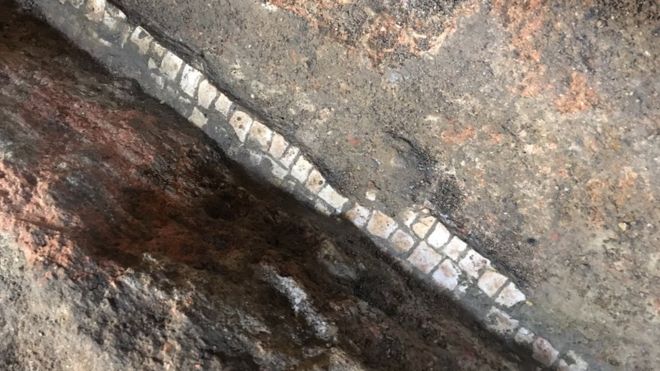
Archaeologists have found the Roman Baths oldest mosaic

Dr Sarah Morton said the find will "continue to develop our understanding of the Roman Baths"
Archaeologists have made "a very exciting discovery" during excavations at an historic Roman baths site.

The oldest mosaic ever found at the site in Bath has been discovered by local volunteer Fiona Medland.

Ms Medland said she was "totally stunned" as this was her "first real find and a dream come true" after 10 years of volunteering with the Bath and Camerton Archaeological Society (BACAS)

Historic England are in discussion with the team on the best way to uncover it.

Stephen Clews, manager of the Roman Baths, said: "So far, just a few of the small cubes of stone that make up the floor have been uncovered. They are a creamy buff colour and are made from local stone. They are small in size, about one centimetre square, and carefully laid.

Read the rest of this article...
Roman boxing gloves unearthed by Vindolanda dig

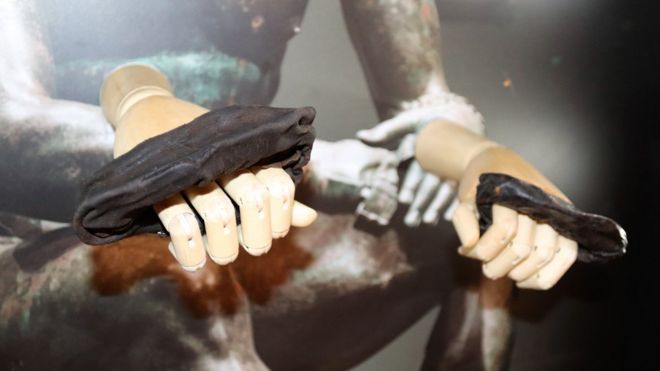
The gloves were "skilfully made" about 2,000 years ago

Roman boxing gloves unearthed during an excavation near Hadrian's Wall have gone on public display.

Experts at Vindolanda, near Hexham, in Northumberland, believe they are "probably the only known surviving examples from the Roman period".

Dr Andrew Birley, Vindolanda Trust director of excavations, described the leather bands as an "astonishing" find.

The gloves were discovered last summer along with a hoard of writing tablets, swords, shoes and bath clogs.

Made of leather, they were designed to fit snugly over the knuckles and have the appearance of a protective guard.

Read the rest of this article...

Remains of Roman road found in Northumberland

A drone shot looks down at the Devil's Causeway, in Northumberland 
[Credit: AAG Archaeology]

The road can be traced from Portgate on Hadrian’s Wall, near the Errington Arms, to the mouth of the River Tweed, but parts of it have remained uncovered.

A long feature crossing the site north of Matfen divided the opinion of experts, with some believing it to be the remains of the Devil’s Causeway and others suggesting it was merely an old dry stone wall.

In an attempt to put the question to bed, AAG Archaeologists cut several trenches to view a cross section of the remains, and found a defining characteristic of the Roman road.

The team discovered a stone spine, seen at excavations of the Devil’s Causeway near Netherwitton in 2001 and Shellbraes in 1937.

Read the rest of this article...

Thursday, February 8, 2018

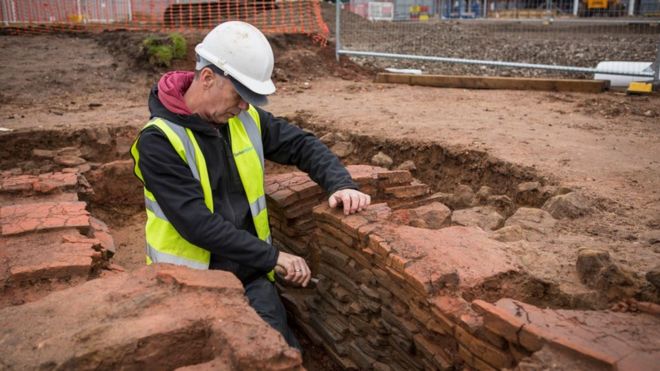
Second century AD Roman villa discovered in Warwick

It is thought the Roman villa was in use for about 200 years

The remains of a "second century" Roman villa including a building "the size of a medieval church" have been found.

The building - in Warwick - shows agricultural use with corn drying ovens and also a "suite of domestic rooms", where the Romans would sleep and eat.

Archaeologists said the estate of which it formed part would have been the largest in the region of its time and spread along the Avon's banks.

The county council said the find would be "preserved" under a new school.

Read the rest of this article...
Rare Roman find unearthed at new school building site

The previously unknown Roman villa which has been unearthed in Warwick.

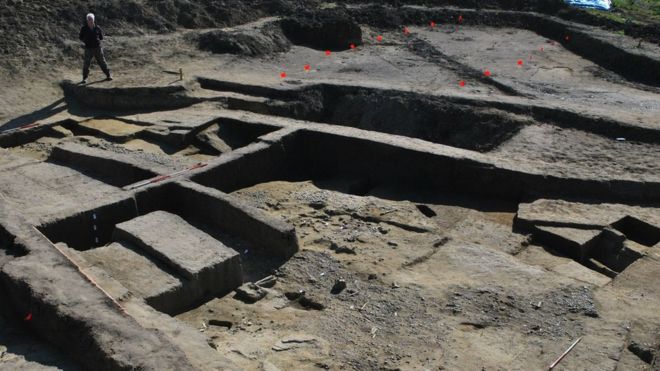
THE remains of a previously unknown Roman building – the largest ever seen in the region – have been discovered during building work on a new school.

Wall foundations for a large aisled structure the size of a medieval church have been unearthed on Banbury Road in Warwick, to where King’s High School is relocating.

Archaeologists say the building most likely forms a component of a large villa estate, which must have spread along the banks of the Avon and been connected to the Roman road system, and early indications suggest it developed in the 2nd century AD and probably went out of use in the 4th century.

Constructed of local sandstone, over 28m long by 14.5m wide, the villa would have been the largest building ever seen in the region.

Corn drying ovens, both inside and outside the structure, attest to an agricultural function, although internal wall divisions at the opposite end of the building probably indicate a suite of domestic rooms.

Read the rest of this article...

Tuesday, February 6, 2018

FORTRESS TOWER OF ANCIENT ODESSOS FOUND BY CHANCE

Part of a U-shape fortress tower from the Late Antiquity fortress wall of ancient Odessos (Odessus) has been discovered in the cellar of a house in Bulgaria’s Black Sea city of Varna. 
Photo: Varna Museum of Archaeology

A Late Antiquity fortress wall tower from the Ancient Thracian, Greek, and Roman city of Odessos (Odessus) has been discovered by accident in the Black Sea city of Varna, with rescue archaeological excavations affirming data about the existence of Quaestura Exercitus, a peculiar administrative district in 6th century AD Byzantium (i.e. the Eastern Roman Empire), under Emperor Justinian I the Great, uniting much of today’s Northern Bulgaria with Cyprus, parts of Anatolia, and the Cyclades.

Parts of a U-shaped fortress tower have been discovered by accident in the cellar of a house at 13 Voden Street in Bulgaria’s Black Sea city of Varna, within the Odessos Archaeological Preserve.

Ensuing rescue excavations have explored the ruins of the tower, which has been found to be part of one of the known fortress walls of ancient Odessos, the Varna Museum of Archaeology has announced, as cited by local news site Varna24.

Read the rest of this article...
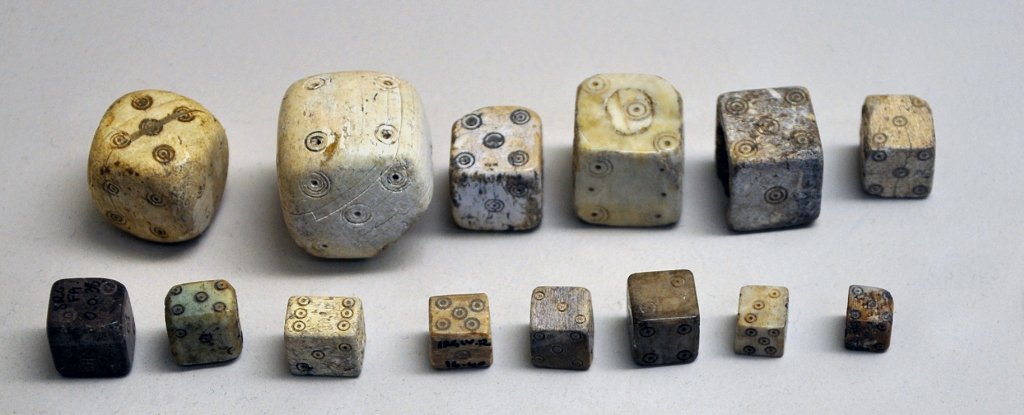
Archaeologists Have Revealed That Game Dice Used to Be Totally Unfair


The game dice we use today are as fair as we can design them - but that wasn't always the case. And now researchers have analysed the history of dice to work out when things changed, and why people didn't care about these probabilities until a certain turning point in civilisation.
Researchers from UC Davis and the American Museum of Natural History have examined 110 cube-shaped dice dating back to the Roman era and found that their design didn't become "fair" until the Renaissance, when scientific thinking started to come to the fore.
Read the rest of this article...

ARPAJON AUX CONFINS DE PLUSIEURS TERRITOIRES DE CITÉS DURANT L’ANTIQUITÉ


Une équipe d’archéologues de l’Inrap mène actuellement une fouille de grande ampleur en plein cÅ“ur de la ville d’Arpajon, préalablement à la réalisation d’un projet immobilier initié par Les Nouveaux constructeurs. Une visite est organisée sur place par les archéologues, samedi 10 février 2018, pour permettre au public de découvrir les vestiges antiques mis au jour.

Read the rest of this article...
Wednesday, December 6, 2017

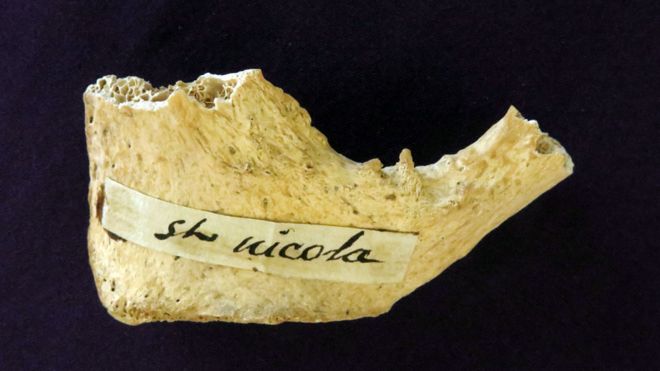
'Santa's bone' proved to be correct age


A fragment of bone claimed to be from St Nicholas - the 4th-Century saintly inspiration for Father Christmas - has been radio carbon tested by the University of Oxford.

The test has found that the relic does date from the time of St Nicholas, who is believed to have died about 343AD.

While not providing proof that this is from the saint, it has been confirmed as authentically from that era.

The Oxford team says these are the first tests carried out on the bones.

Relics of St Nicholas, who died in modern-day Turkey, have been kept in the crypt of a church in Bari in Italy since the 11th Century.

Read the rest of this article...
Wednesday, November 29, 2017

Third Roman Temple In Silchester May Have Been Part Of Nero's Vanity Project

Aerial view of the temple site in Silchester [Credit: Dr Kevin White, University of Reading]

The temple remains were found within the grounds of the Old Manor House in the Roman town at Silchester, along with rare tiles stamped with the name of the emperor, who ruled AD54-68.

The temple joined two others to make a group of three when it was investigated in Silchester in autumn 2017, and is the first to be identified in the town for more than 100 years. The three temples are located in a walled sanctuary, numbered Insula XXX by Victorian archaeologists. It would have been a striking gateway to the city for travellers from London.

Four fragments of tiles stamped in Nero's name were found in a ritual pit within the temple site – the largest concentration ever found in the town – along with another three at the kiln site which made the tiles in nearby Little London. These provide further evidence that the temples could all have been part of a Nero-sponsored building project in Silchester.

Read the rest of this article...

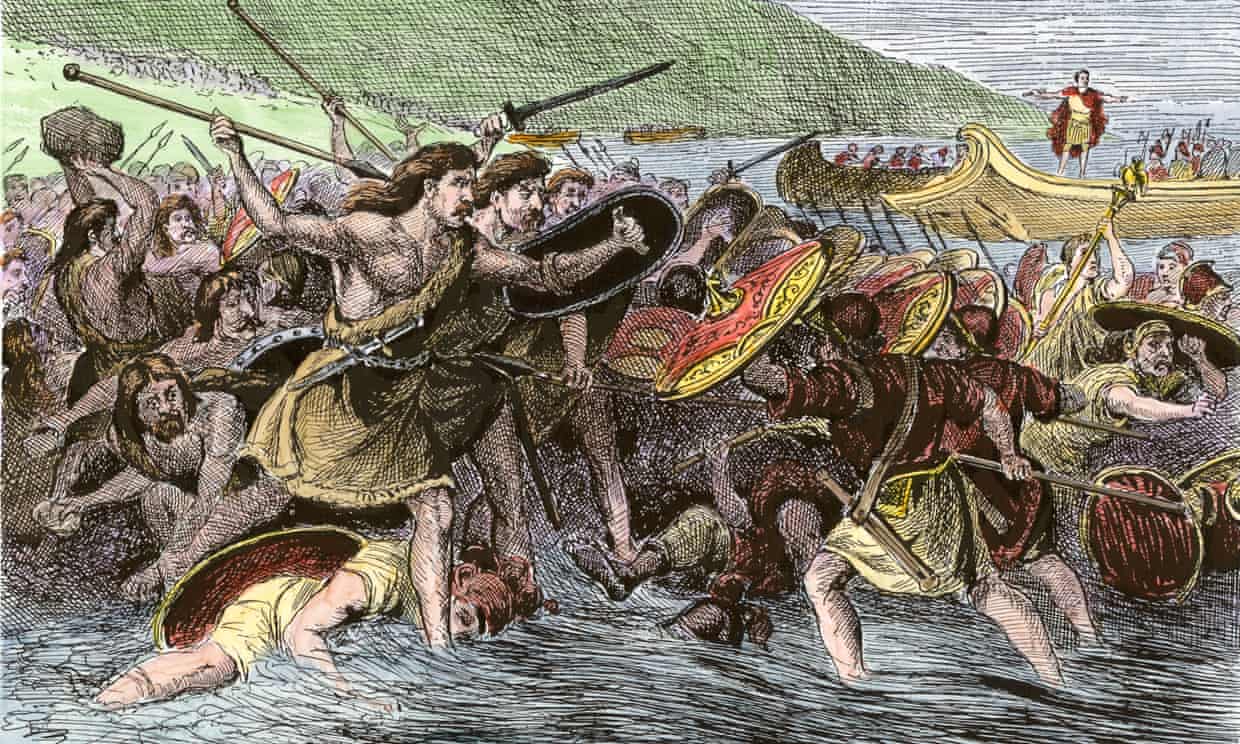
Caesar's invasion of Britain began from Pegwell Bay in Kent, say archaeologists


Julius Caesar’s invasion of Britain was launched from the sandy shores of Pegwell Bay on the most easterly tip of Kent, according to fresh evidence unearthed by archaeologists.

Researchers named the wide, shallow bay the most likely landing spot for the Roman fleet after excavators found the remains of a defensive base dating to the first century BC in the nearby hamlet of Ebbsfleet, near Ramsgate.
The ancient base covered more than 20 hectares and would have been ideally placed to protect the 800 ships the Roman army had to haul ashore when they were battered by a storm soon after they arrived from France in 54BC.

“This is the first archaeological evidence we have for Julius Caesar’s invasion of Britain,” said Andrew Fitzpatrick, a researcher at the University of Leicester. “It’s a large defended site that dates to the first century BC.”

Read the rest of this article...

Julius Caesar's Britain invasion site 'found by archaeologists'

Archaeologists from the University ofLeicester believe the ditch was part of a large fort in Kent

Archaeologists believe they may have uncovered the first evidence of Julius Caesar's invasion of Britain in 54BC.

The discovery of a defensive ditch and weapons led them to identify Pegwell Bay in Thanet, Kent, as the place they believe the Romans landed.

The ditch, in the nearby hamlet of Ebbsfleet, was part of a large fort, the University of Leicester team says.

Its location was consistent with clues provided by Caesar's own account of the invasion, the team said.

Read the rest of this article...

Tuesday, October 17, 2017

Silver Treasure Found near Bulgaria’s Mezdra


A treasure of 187 silver Roman imperial coins was discovered during excavation works in the town of Mezdra, North-West Bulgaria. It has a great cultural-historical and numismatic value, experts say.

The silver treasure was in a clay pot and was found under the roots of an old tree. Historians define the coins as Roman imperial denarii and antonianians, which were minted for a period of two hundred years. They depict the faces of emperors and their wives who lived from the first half of the first century to the middle of the third century.

Archaeologists, however, argue that the find which is now in the museum in the city of Vratsa, is only a small part of the real treasure. It confirms again that in the place of today's Mezdra there was a rich central town with thousands of years of history.

Read the rest of this article...

Monday, October 9, 2017

How the Romans fed their legions thousands of miles from home

Conquering Romans relied on resources from near and far to sustain their forces against the native tribes in Wales, according to new research by Cardiff University archaeologists.


In a study published in Archaeological and Anthropological Sciences, Dr Peter Guest and Dr Richard Madgwick of the University’s School of History, Archaeology and Religion, used biochemical techniques of animal remains to reveal the origin of livestock supplied to the legionary fortress at Caerleon.

Prior to the study, leading theories argued that locally produced agricultural resources must have been vital in feeding and maintaining the substantial occupying army, though this idea was based on very limited evidence.

Using strontium isotope analysis to analyse the bones of domestic animals from the fortress, the researchers identified a mix of sources. Significantly, the diverse pattern of results does not suggest a centralised supply chain from near or far – results that challenge existing theories.

Read the rest of this article...

Friday, October 6, 2017

A part of Hadrian's Wall has been found in Newcastle city centre, shedding new light on its route


Hadrians’s Wall has been uncovered during site investigations as part of a scheme to revive a historic building in Newcastle city centre.
The section of the wall has been revealed outside the Mining Institute on Westgate Road.
It was reportedly last seen during an excavation on the site in 1952.
But Simon Brooks, acting general manager of the Mining Institute, said: “There was some controversy about whether the Wall had been found. A lot of people were sceptical but now we have proof positive and we are delighted.”

Tuesday, September 26, 2017

Rare tiles found near Basingstoke shed insight on Roman history


Evidence of one of the Roman Empire’s best-known rulers has been discovered near Basingstoke.
A team of archaeologists from the University of Reading has found three tiles bearing the stamp of Emperor Nero at a site in Little London.
The tiles date back almost 2,000 years, and were found earlier this month at the Roman Tile Kiln site.
Only 14 such tiles have ever been found in the UK, including another found at Little London back in 1925 and four discovered within a ritual put at a temple in nearby Silchester.
The University of Reading team is currently excavating a series of Roman kiln structures at the Little London site, which includes some huge brick and tile production facilities.
Read the rest of this article...

Thursday, September 14, 2017

Unearthed near Hadrian’s Wall: lost secrets of first Roman soldiers to fight the barbarians

Dig team stumble across thousands of pristine artefacts at ancient Vindolanda garrison site in Northumberland


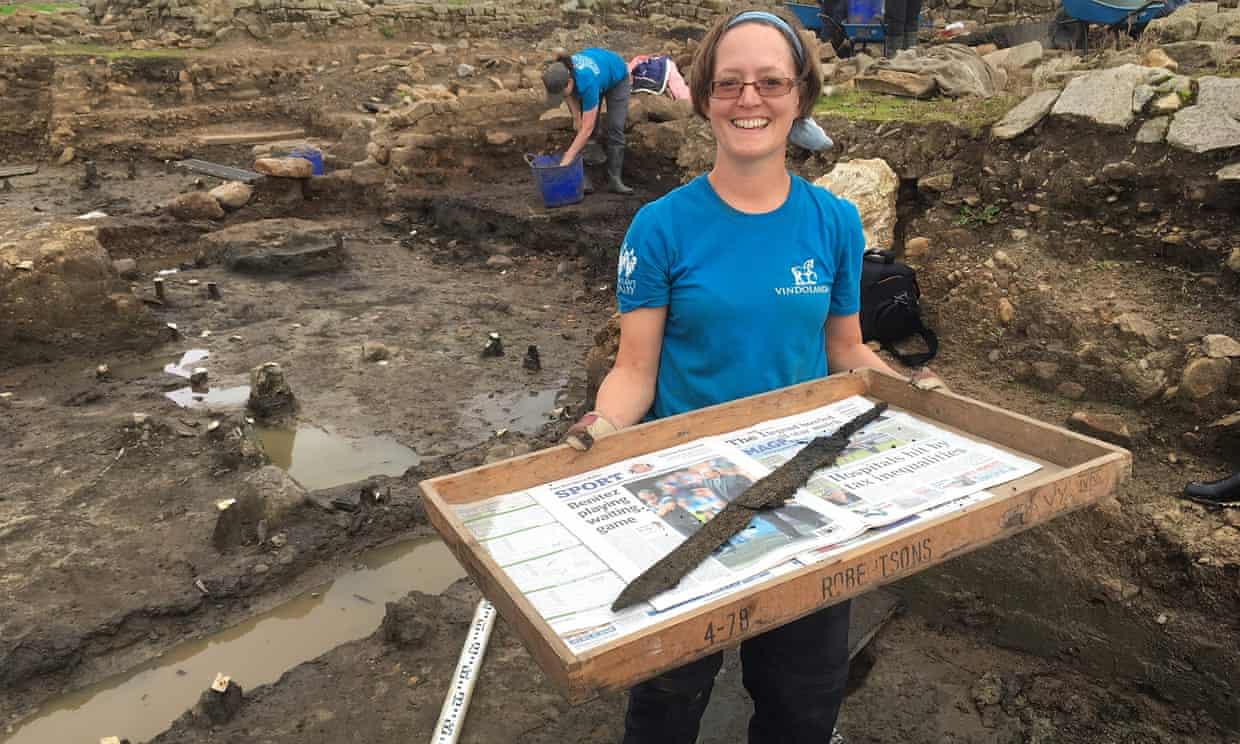
Dig volunteer Sarah Baker with one of the rare cavalry swords. 
Photograph: Sonya Galloway

Archaeologists are likening the discovery to winning the lottery. A Roman cavalry barracks has been unearthed near Hadrian’s Wall, complete with extraordinary military and personal possessions left behind by soldiers and their families almost 2,000 years ago. A treasure trove of thousands of artefacts dating from the early second century has been excavated over the past fortnight.

The find is significant not just because of its size and pristine state, but also for its contribution to the history of Hadrian’s Wall, showing the military build-up that led to its construction in AD122. The barracks pre-dates the wall: the Romans already had a huge military presence in the area, keeping the local population under control.

Read the rest of this article...

Cache of Roman cavalry weapons found at Vindolanda

Swords, arrow heads and ballista bolts amongst a cache of artefacts discovered during cavalry barrack excavations at Roman Vindolanda.


Aerial view of remains of 4th century stone fort at Vindolanda 
[Credit: Sonya Galloway, Vindolanda Trust]

During the past few weeks archaeologists at the Roman fort of Vindolanda have made one remarkable discovery after another in what has been an exceptional year for the research excavations.

Test pit excavations, below the stone foundations of the last stone fortress revealed a layer of black, sweet smelling and perfectly preserved anaerobic, oxygen free, soils in an area where they were completely unexpected. Hidden in this soil were the timber walls and floors, fences, pottery and animal bones, from the abandonment of a Roman cavalry barrack. The excavated rooms included stables for horses, living accommodation, ovens and fireplaces.

While excavating the material from the corner of one of the living rooms a volunteer excavator made an outstanding discovery.

Read the rest of this article...

UN VASTE DOMAINE ANTIQUE À CESSON-SÉVIGNÉ


À Cesson-Sévigné (Ille-et-Vilaine), en amont de l’aménagement des ZAC Atalante ViaSilva et Les Pierrins, une prescription de l’État (Drac Bretagne) conduit une équipe de l’Institut national de recherches archéologiques préventives à réaliser une fouille sur une surface de près de 7 hectares.

Cette intervention, démarrée le 26 juin 2017, a actuellement permis de mettre au jour une partie d’un vaste domaine rural gallo-romain, de type villa, ainsi qu’une portion du fossé ceinturant une motte castrale du Moyen Âge. Ces occupations anciennes s’inscrivent dans un espace traversé par un faisceau de voies, depuis la ville antique de Rennes et desservant Avranches, Jublains et Angers.

L’emprise de la fouille permet d’étudier la quasi-intégralité du domaine foncier antique et son insertion dans son environnement naturel. Ces découvertes contribueront ainsi à la compréhension de l’organisation des campagnes à l’époque gallo-romaine et leur mutation durant la période médiévale.

Read the rest of this article...