Tuesday, October 2, 2018

Carmarthen Roman dig is filled in after key findings

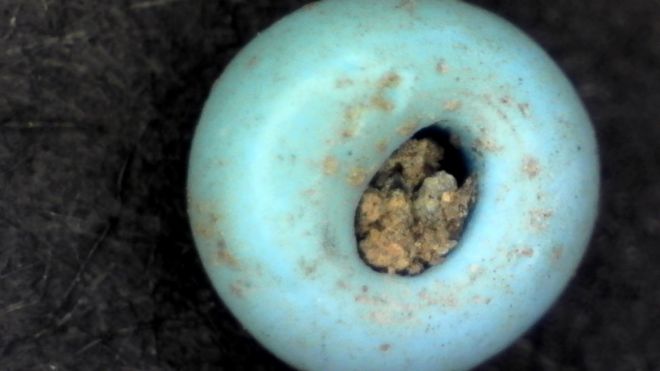
A ceramic faience jewellery bead found at Priory Street
ARCHAEOLOGY WALES

An archaeological dig described as one of the most important in Wales has now been buried again and handed back to developers.

Archaeologists have spent three months sifting the site on a main street in Carmarthen, making substantial finds.

The dig was a condition of planning permission for a block of flats there.

As a result Archaeology Wales now believes Roman Carmarthen was established earlier and was a wealthy town of considerable status.

Its team moved in after developers had demolished a former car showroom and before they started work building homes for the Bro Myrddin housing association.

Read the rest of this article...

Archaeologists unearth Roman road in Netherlands

The dig is metres away from a main road
OMROEP WEST

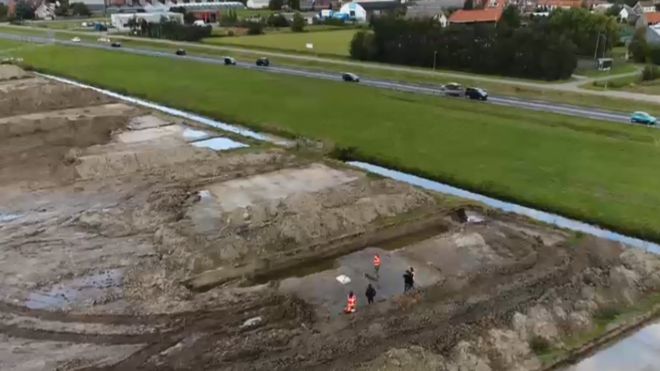
Archaeologists in the Netherlands have discovered a 2,000-year-old stretch of Roman road and the remains of a Roman village at the town of Katwijk, which once marked the northern boundary of the Roman Empire.

The road is 125 metres (410 ft) long and lies close to a busy highway in the Valkenburg suburb. The Roman village comes complete with a canal and burial ground, the Omroep West regional broadcaster reports.

South Holland Province asked archaeologists to examine the whole area where the new RijnlandRoute bypass is to run, aware of the local Roman legacy and anxious to preserve any finds.

The Emperor Claudius built the city of Lugdunum Batavorum at the mouth of the Old Rhine River, which still flows through Katwijk, and ships would sail from there for Britain. But no one expected to find such well-preserved remains in Katwijk itself.

Read the rest of this article...

Monday, August 6, 2018

'Spectacular' ancient public library discovered in Germany

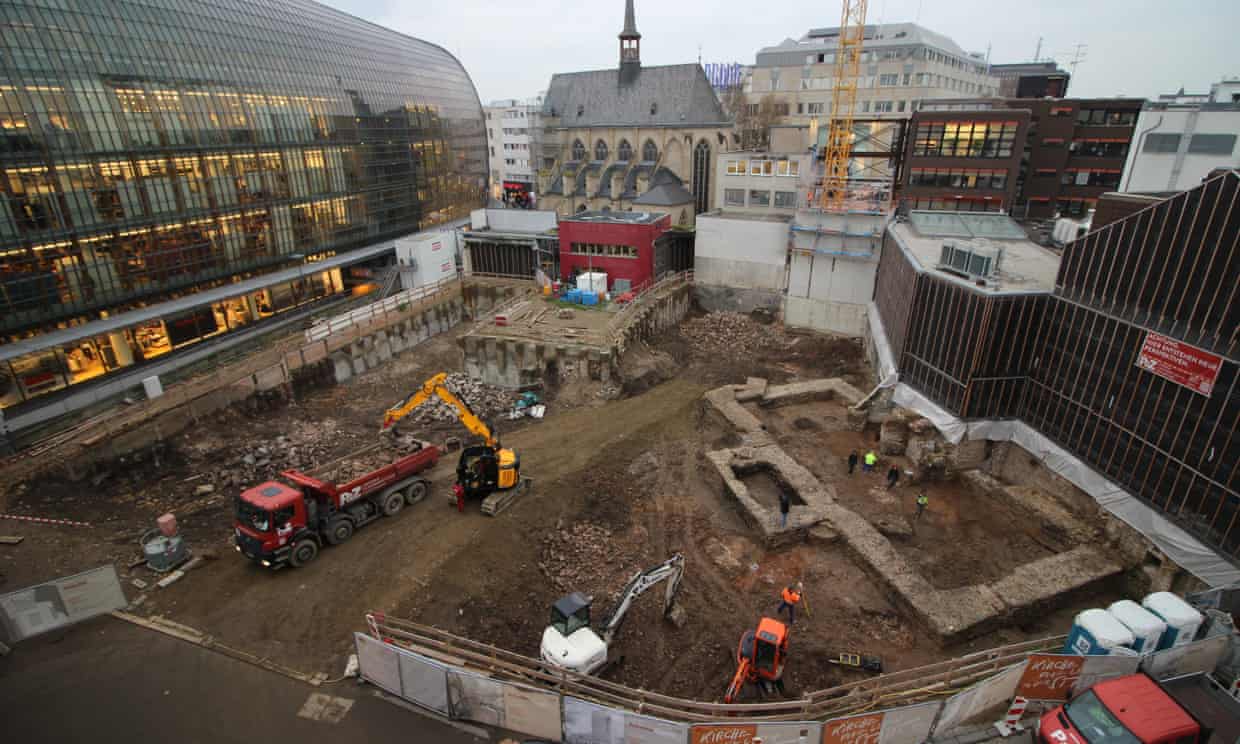
‘Really incredible’ … the site of the second-century library discovered in Cologne. Photograph: Hi-flyFoto/Roman-Germanic Museum of Cologne

The remains of the oldest public library in Germany, a building erected almost two millennia ago that may have housed up to 20,000 scrolls, have been discovered in the middle of Cologne.

The walls were first uncovered in 2017, during an excavation on the grounds of a Protestant church in the centre of the city. Archaeologists knew they were of Roman origins, with Cologne being one of Germany’s oldest cities, founded by the Romans in 50 AD under the name Colonia. But the discovery of niches in the walls, measuring approximately 80cm by 50cm, was, initially, mystifying.

“It took us some time to match up the parallels – we could see the niches were too small to bear statues inside. But what they are are kind of cupboards for the scrolls,” said Dr Dirk Schmitz from the Roman-Germanic Museum of Cologne. “They are very particular to libraries – you can see the same ones in the library at Ephesus.”

Read the rest of this article...

Ancient Roman Library Discovered Beneath German City

The excavation of the ancient library in Cologne, Germany.
Credit: Roman-Germanic Museum of Cologne

Beneath the soil in Cologne, Germany, lies a bibliophile's dream: an ancient Roman library that once held up to 20,000 scrolls, according to news reports.

Archaeologists discovered the epic structure in 2017 while they were excavating the grounds of a Protestant church to build a new community center. Considering Cologne is one of Germany's oldest cities, founded in A.D. 50, it's no surprise that it still has structures dating back to Roman times.

However, archaeologists didn't figure out that the structure was a library until they found mysterious holes in the walls, each measuring about 31 inches by 20 inches (80 by 50 centimeters), The Guardian reported.

Read the rest of this article...

Thursday, July 19, 2018

Archaeologists find remains of 'ancient church' on banks of Tiber in Rome


Archaeologists have been left at a loss by the discovery of some mysterious ruins in Rome, which could be the remains of one of the city's earliest churches.

The find was made at Ponte Milvio, a bridge along the River Tiber in the northern part of the city. And it came about completely by chance while electrical technicians, who were laying cables along the site, uncovered remains of buildings dating back to between the first and fourth century AD.

Rome's Archaeological Superintendency called the discovery "an archaeological enigma shrouded in mystery".

Read the rest of this article...

Roman coins discovered at Apsaros in Georgia

The coins were discovered by a Polish-Georgian team of archaeologists conducting 
excavations in Apsaros [Credit: fb/Gonio - Apsaros Fortress]

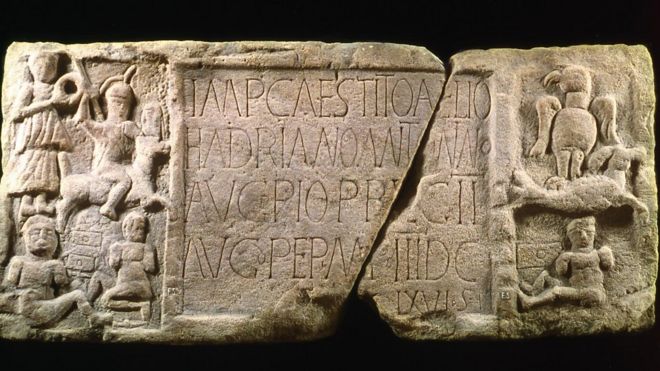
Bronze and silver Roman coins have been discovered by a Polish-Georgian team of archaeologists conducting excavations in the Roman fort of Apsaros Georgia. According to the discoverers, this could be a small part of a larger treasure.

The oldest coins in the find were minted during the reign of Hadrian (117-138 AD); the youngest come from the last years of the reign of Septimius Severus (beginning of the 3rd century AD).

"All coins were found very close to each other in the Roman fort Apsaros", said Dr. Radosław Karasiewicz-Szczypiorski from the Institute of Archaeology of the University of Warsaw, project leader from the Polish side. The Georgian side is led by Prof. Shota Mamuladze from the Batumi Shota Rustaveli State University and the Gonio-Apsaros Museum and Reserve.

Polish and Georgian researchers will search for more coins. The excavation season will continue until the end of July. According to the numismatics expert of the expedition, Dr. Piotr Jaworski from the Institute of Archaeology of the University of Warsaw, the coins might be a small part of a larger treasure. It could be scattered as a result of later earthworks and construction works in the fort. After the Romans, Byzantine, Ottoman and even Soviet garrisons were also stationed in the fort.

Read the rest of this article...

Romans had whaling industry, archaeological excavation suggests

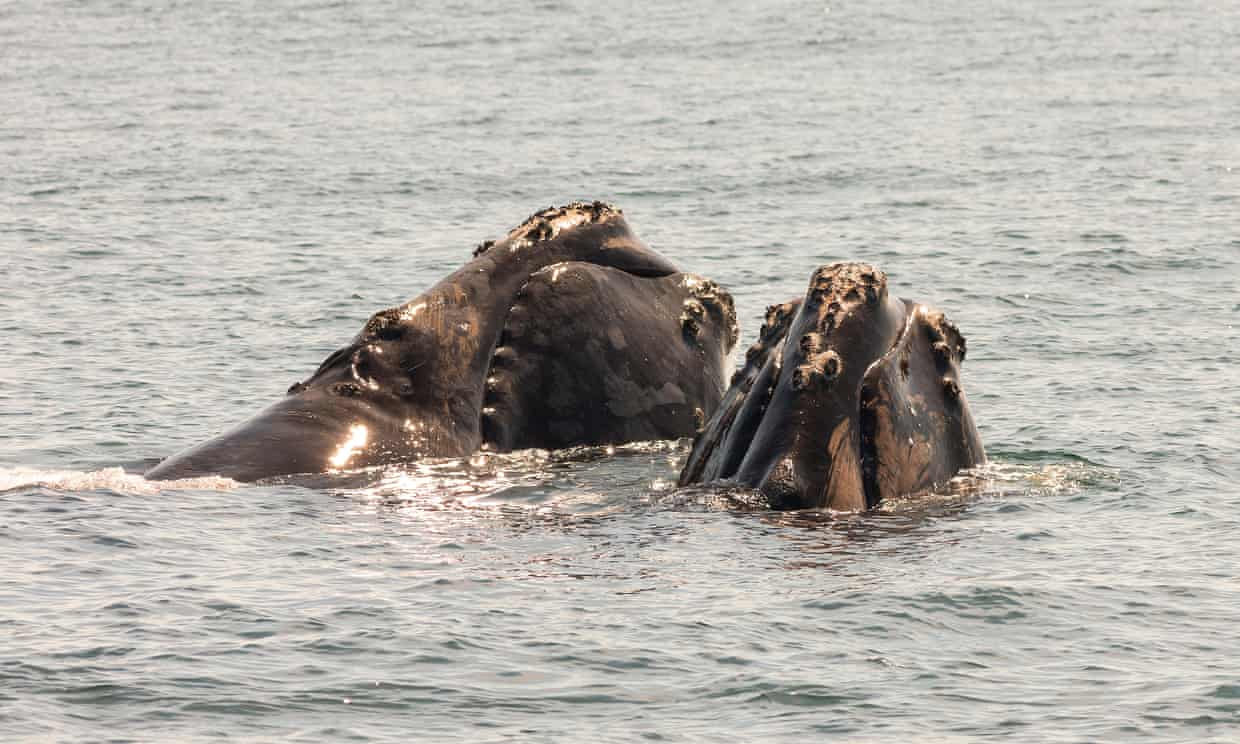
North Atlantic right whales, off Grand Manan Island in Canada. Photograph: Alamy

Ancient bones found around the Strait of Gibraltar suggest that the Romans might have had a thriving whaling industry, researchers have claimed.
The bones, dating to the first few centuries AD or earlier, belong to grey whales and North Atlantic right whales – coastal migratory species that are no longer found in European waters.
Researchers say this not only suggests these whales might have been common around the entrance to the Mediterranean in Roman times, but that Romans might have hunted them.
They add that Romans would not have had the technology to hunt whale species found in the region today - sperm or fin whales which live further out at sea - meaning evidence of whaling might not have been something archaeologists and historians were looking out for.

Read the rest of this article...

Thursday, July 5, 2018

Lincoln Developers Stumble Across Roman Burials


Three perfectly-preserved Roman skeletons, believed to be part of the same burial ground where 23 skeletons were unearthed in a 2015 dig, have been discovered at the site of a new student accommodation development in Lincoln.

They were unearthed at the former site of the Taste Of Marrakesh restaurant in the city centre where a development of 400 student flats is to be built. Among the discoveries were some from the Medieval era - including cellars, wells and a bone ice skate.

Network Archaeology and city archaeologist Alastair Macintosh have spent a month on the dig in collaboration with developer Jackson & Jackson.

Read the rest of this article...

Ancient Roman ‘hand of god’ discovered near Hadrian’s Wall sheds light on biggest combat operation ever in UK

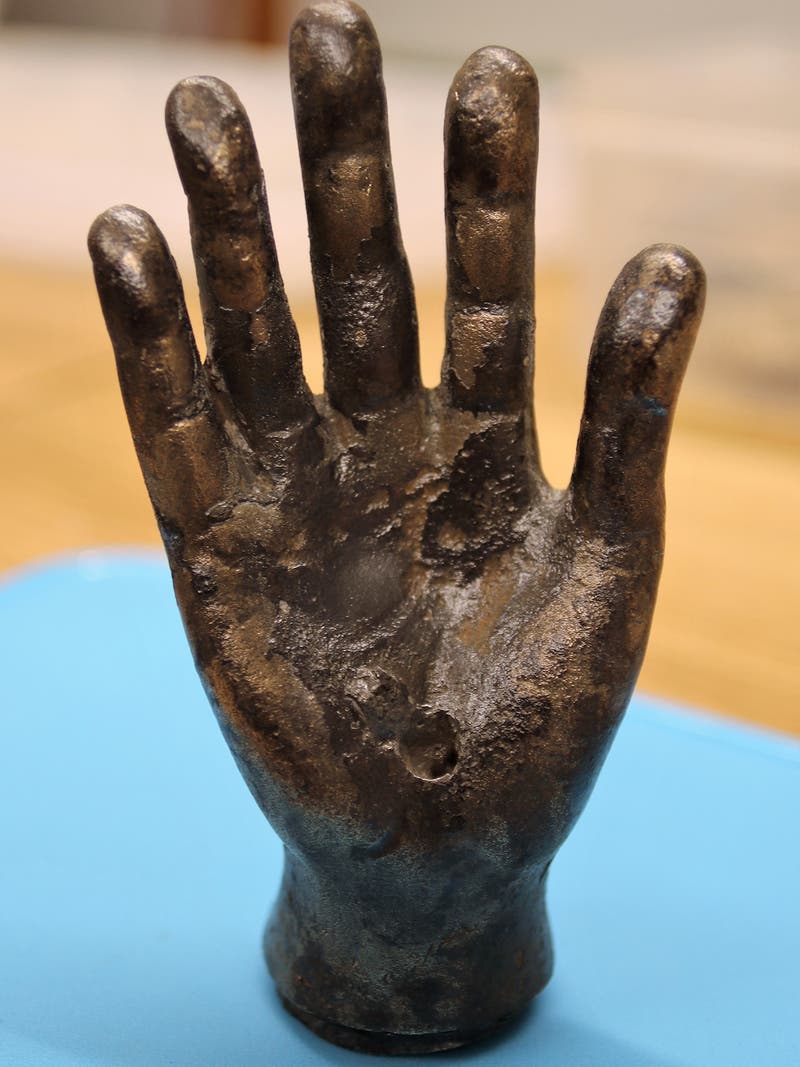
It is likely that the hand was ritually buried by one of the Roman commanders who took part in the conflict (Vindolanda Trust)

Archaeologists have discovered an ancient Roman “hand of god” – but the story it tells is tragically anything but heavenly.

The hand – unearthed near Hadrian’s Wall and made of 2.3 kilos of solid bronze – was almost certainly a gift to a military deity for giving the Romans victory in the largest military combat operation ever carried out in Britain, before or since.

The operation – a relatively little-known Roman invasion of Scotland in 209-210 AD – was also probably one of the bloodiest events in British history.

Read the rest of this article...

Wednesday, June 20, 2018

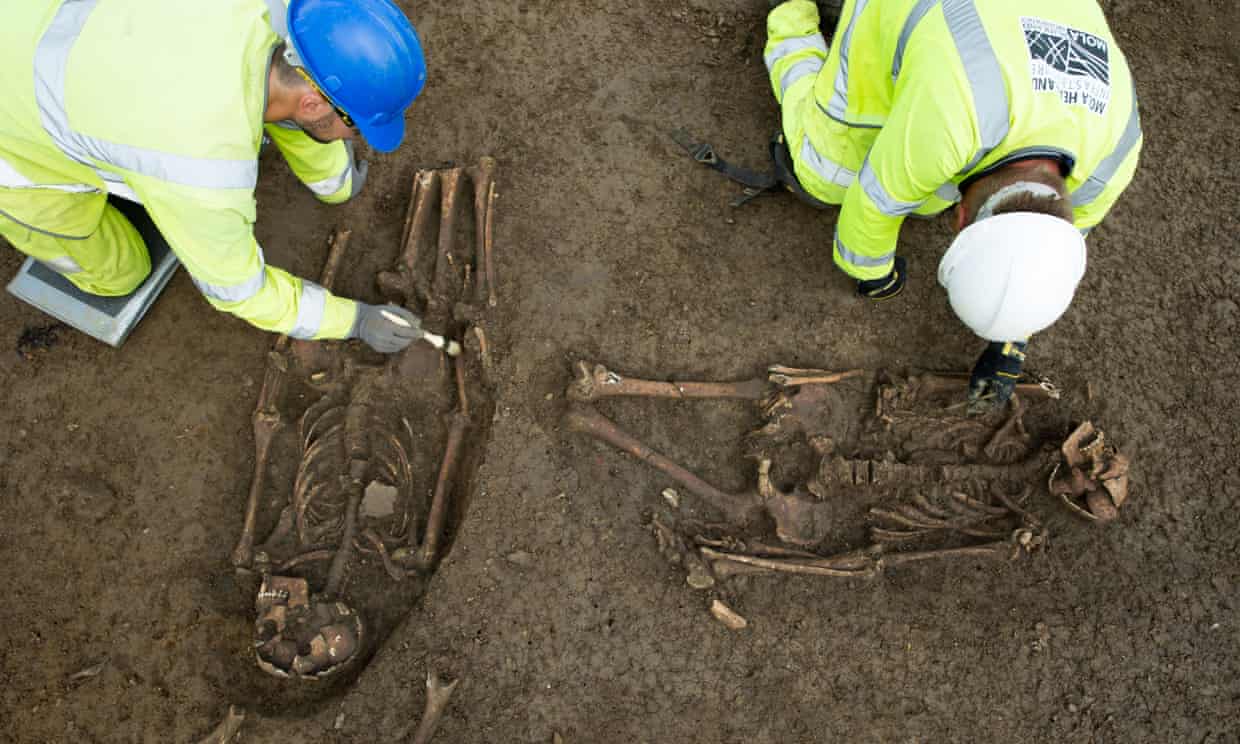
Archaeologists in Cambridgeshire find graves of two men with legs chopped off

‘Somebody really, really didn’t like these guys,’ says Jonathan House, archaeologist with the Mola Headland Infrastructure team. 
Photograph: Highways England, courtesy of Mola Headland Infrastructure

Exclusive: men believed to be from late Roman or early Saxon period were found in pit being used as rubbish dump

The graves of two men whose legs were chopped off at the knees and placed carefully by their shoulders before burial have been discovered by archaeologists working on a huge linear site in advance of roadworks in Cambridgeshire.

The best scenario the archaeologists can hope for is that the unfortunate men were dead when their legs were mutilated. It also appears their skulls were smashed in, although that could be later damage.

“Was it to keep them in their graves and stop them from running away?” said Kasia Gdaniec, the senior archaeologist with Cambridge county council. “Or had they tried to run away and was this a punishment – and a warning to everyone else not even to think of it?”

Read the rest of this article...

Monday, June 18, 2018

Bedfordshire's first Roman town wall unearthed in Sandy

Items discovered by Les Capon and his team include the skeleton of a woman, a funeral pyre, Roman rubbish and a pottery kiln

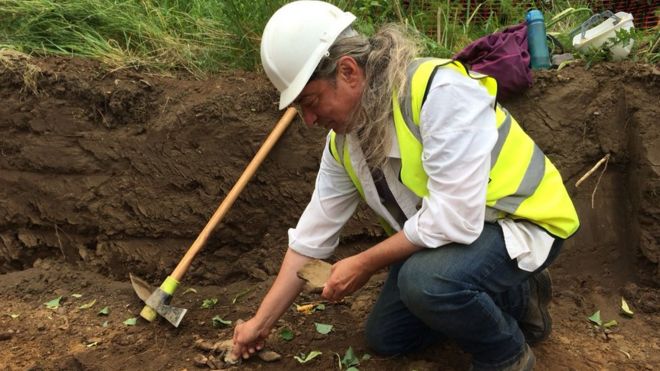
Archaeologists excavating a former allotment site in a market town have made the "absolutely brilliant" find of a previously-unknown Roman wall.

The dig in Sandy, Bedfordshire, has uncovered about 200 items dating from the Iron Age in 500 BC to the Saxon period in 800 AD.

Among the finds is the remains of a Saxon house.

The site, in Stratford Road, is to be turned into a cemetery, car park and council depot.

Read the rest of this article...

Wednesday, June 13, 2018

Imperial Roman villa found near Milvian Bridge

Credit: ANSA

An Imperial Roman villa has been found along the banks of the Tiber near the Milvian Bridge, archaeologists said Tuesday.
Digs have uncovered a large floor area in 'opus sectile', decorated with "extraordinary" multicoloured marble floral motifs, they said.

The beauty of the floor has led experts to believe that the rest of the building was full of precious decorations.

The villa's setting so close to the river is unusual, archaeologists said.

Read the rest of this article...

MISE AU JOUR D’UNE VILLA DE L’ANTIQUITÉ


À Vire (Calvados), l’Inrap conduit depuis la fin du mois de février 2018 une fouille d’envergure, sur prescription de l’Etat (Drac Normandie). Cette opération s’inscrit dans le cadre de l’extension du Parc d’activités La Papillonnière menée par la communauté de communes Intercom de la Vire au Noireau.

Les recherches d’une équipe d’archéologues ont permis de mettre au jour les vestiges d’une villa gallo-romaine occupée du Ier au IIIe siècle de notre ère. Ils témoignent de la richesse de son propriétaire. À l’ouest de la villa, le site livre également les vestiges d’une occupation plus tardive, entre les VIIe et Xe siècles.

Read the rest of this article...

Tuesday, June 5, 2018

How Jesus Died: Rare Evidence of Roman Crucifixion Found

This cross was erected inside the Roman Colosseum as a monument to the suffering of early Christians in Rome. The Christian Bible describes the crucifixion of Jesus Christ as occurring in Jerusalem under Roman rule at the beginning of the Christian era.
Credit: Jared I. Lenz Photography/Getty

The body of a man buried in northern Italy 2,000 years ago shows signs that he died after being nailed to a wooden cross, the method used for the execution of Jesus described in the Christian Bible.
Although crucifixion was a common form of capital punishment for criminals and slaves in ancient Roman times, the new finding is only the second time that direct archaeological evidence of it has been found.
A new study of the skeletal remains of the man, found near Venice in 2007, reveals a lesion and unhealed fracture on one of the heel bones that suggests his feet had been nailed to a cross. 
Read the rest of this article...

Roman Tomb Unearthed; to Everyone’s Surprise, It’s Intact

Some of the funerary wares found in a chamber tomb near Rome.CreditRomano D'Agostino, Special Superintendence for Rome

ROME — Sometimes the most extraordinary finds occur by sheer luck.
At least that was the case of a fourth century B.C. chamber tomb that came to light five weeks ago during the construction of an aqueduct in a Rome suburb, when an earthmover accidentally opened a hole in the side of the chamber.
“Had the machine dug just four inches to the left, we would have never found the tomb,” Francesco Prosperetti, Rome’s special superintendent with archaeological oversight, told reporters on Friday. The tomb contained the remains of four occupants — three men and a woman — and funerary wares.
Read the rest of this article...

Monday, May 7, 2018

Roman relics found in Rhine region show evidence of bloody uprising


One of the ancient Roman helmets found in the recent excavation in Krefeld. Photo: DPA

In the North Rhine-Westphalian town of Krefeld, a recent archaeological dig revealed thousands of ancient relics. These finds tell the story of the region’s turbulent Roman history.
Tens of thousands of artefacts were dug out of sand and clay near the Rhine, archaeologists in Krefeld announced in April.

A recent 10-month excavation along the Rhine revealed a wealth of previously-unseen Roman ruins, including hundreds of coins, weapons, horse skeletons, jewellery, helmets, and the artfully decorated belt buckle of a soldier. Packed in boxes, the relics span over 75 cubic metres. 

In the small town just outside Düsseldorf, nearly 6,500 graves were found dating from between 800 BC and 800 AD, which often contained valuable burial objects. It is one of the largest ancient cemeteries north of the Alps. 

Read the rest of this article...

Thursday, April 26, 2018

Skeleton of child trying to shelter from Vesuvius eruption uncovered in Pompeii

The skeleton of the child, thought to be aged seven or eight, found at Pompeii

Archeologists in Pompeii have discovered the skeleton of a child who tried in vain to hide from the cataclysmic eruption of Mt Vesuvius nearly 2,000 years ago.

It is the first time in about 50 years that a child’s skeleton has been found in the remains of the ancient Roman city, which lies just south of Naples and was destroyed in AD79.

The child, believed to be seven or eight years old, apparently took refuge in a public baths complex after the volcano erupted and started spewing ash and pumice into the air.

But the building could not save the terrified youngster from the effects of the eruption, which was witnessed by Pliny the Younger.

It is believed that he or she was not killed by falling debris, but instead suffocated by the clouds of scorching ash that enveloped the city, a thriving port on the Bay of Naples.

Read the rest of this article...

The biggest status symbol in the Nordic Iron Age was a goose

A woman buried with a sheep is typical of the graves throughout the Roman Iron Age (in the Nordic countries). Other animal species (including sheep) are found in younger periods and demonstrate Roman influence. (Photo: Kroppedal Museum)

Forget about Gucci bags, gold jewellery, and fast cars. In the Nordic Roman Iron Age, the best status symbol was a goose. Alternatively a hen.

That is the conclusion made by Danish scientists after studying almost 100 graves from the Early and Late Roman Iron Age (1-375 CE).

They further posit that the Roman influence led to a significant shift in the way in which Scandinavians buried their dead.

One of the changes was the custom of burying people with different species of animals – and the newly introduced hens and geese were especially high-ranking status symbols.

“We don’t have these kinds of poultry before Christ, so it is clearly associated with the Roman life and Roman status. In the Roman Empire, hens and geese were a common burial gift, while in Denmark they were new and exotic species,” says Anne Birgitte Gotfredsen from the Natural History Museum of Denmark at the University of Copenhagen.

Read the rest of this article...

Monday, April 23, 2018

Colourful past of Scotland's Roman wall

THE HUNTERIAN/ UNIVERSITY OF GLASGOW
The Summerston distance stone from the Antonine Wall, which was found near Bearsden, was one artefact successfully tested for pigment

Parts of the Roman Empire's most north western frontier were likely to have been painted in bright colours, new research has found.

The Antonine Wall was built across central Scotland from Old Kilpatrick in the west to Bridgeness in the east.

Now an expert at Glasgow University has used cutting edge technology to examine the remnants of the structure.

And archaeologist Louisa Campbell has found that "distance stones" were painted vibrant red and yellow.

She said the coloured stones were used by the Romans to demonstrate their power over local people.

"The public are accustomed to seeing these sculptures in bland greys, creams, white (for marble) and don't get the full impact that they would have had on the Roman and indigenous audiences 2,.000 years ago," she added.

Read the rest of this article...

Monday, April 16, 2018

Unusual climate during Roman times plunged Eurasia into hunger and disease


UNIVERSITY OF HELSINKI—A recent study published in an esteemed academic journal indicates that volcanic eruptions in the mid 500s resulted in an unusually gloomy and cold period. A joint research project of the Chronology Laboratory of the Finnish Museum of Natural History and Natural Resources Institute Finland (Luke) suggests that the years 536 and 541-544 CE were very difficult for many people.

An extended period of little light may make it difficult for humans to survive. The level of production of plants is dependent on the amount of available sunlight. Food production, i.e, farming and animal husbandry, rely on the same solar energy. Humans, meanwhile, become more prone to disease if they are not exposed to enough sunlight to produce vitamin D.

“Our research shows that the climate anomaly, which covered all of the northern hemisphere, was the compound result of several volcanic eruptions,” says Markku Oinonen, director of the Chronology Laboratory.

The aerosols that were released into the atmosphere with the eruptions covered the sun for a long time.

Read the rest of this article...