Monday, February 22, 2016

Tourists in their millions are 'wearing out Pompeii'

The Temple of Apollo, one of the areas most affected by heavy foot-fall. 
Photo: Ian Scott/Flickr

Tourists on cruises are being advised to change their itineraries and check out lesser-known archaeological sites.

Last week, the five towns of Cinque Terre announced that they could no longer cope with the barrage of tourists making their way along the breathtaking coastal walkways. Tourist numbers will be capped and once the daily limit is reached, no more people will be allowed into the Unesco site.
It seems that Pompeii too is struggling from the high numbers of visitors traipsing round the ancient site - and one group in particular is thought to be to blame.

"Cruise-tourists are wearing out the ruins of Pompeii. The entrance steps of the Temple of Apollo, in particular, have been ruined by the influx of tourists,” claimed Adele Lagi, from Unesco, at a conference organized by the non-profit organization I Love Pompeii.

Read the rest of this article...

Six breathtaking Roman ruins that you've never heard of


The bikini isn't as modern as you might think. Photo: Kenton Greening

 Italy has so much history that it's hard to know where to visit when the weekend arrives. Here are six uniquely, fascinating and downright spiffing Roman sites that are well worth a visit.

The Anfiteatro Campano in Campania was built in the first century AD and is 49m high, with a circumference of 170 metres. It once hosted thousands of baying, bloodthirsty Romans who came to watch gladiators perform.

Although the ruin might not be quite as well preserved as the Flavian Ampitheater in Rome, a visitor ticket costs just €2.50 – some €10 less than the price of a visit to the Colosseum.

Read the rest of this article...
Friday, February 19, 2016

Archaeologists Discover Late Roman Graves at Ancient Thracian Tomb Ostrusha near Bulgaria’s Kazanlak

Two of the three graves from the Late Roman period found at the Ostrusha Tomb near Bulgaria’s Kazanlak and Shipka. Photo: Archaeologist Meglena Parvin / TV grab from PressTV

Three funerals from the Late Roman period have been discovered during recent excavations at the Ostrusha Tomb, one of the most famous Ancient Thracian burial mounds (tumuli) in the Valley of Thracian Kings near the town of Kazanlak in Central Bulgaria.

The three graves, which date back to the second half of the 4th century AD, were found during rescue excavations in the late fall of 2015 by archaeologist Diana Dimitrova from the National Institute and Museum of Archaeology in Sofia and Meglena Parvin from the Iskra Museum of History in Kazanlak.

Their findings have just been presented during the 35th Regional Conference of the Archaeologists from Southeast Bulgaria hosted by the Museum in Kazanlak, which featured 15 participants with 11 reports, reports Darik Stara Zagora.


Read the rest of this article...

1st Century bar? Archaeological find in France offers glimpse into ancient tavern


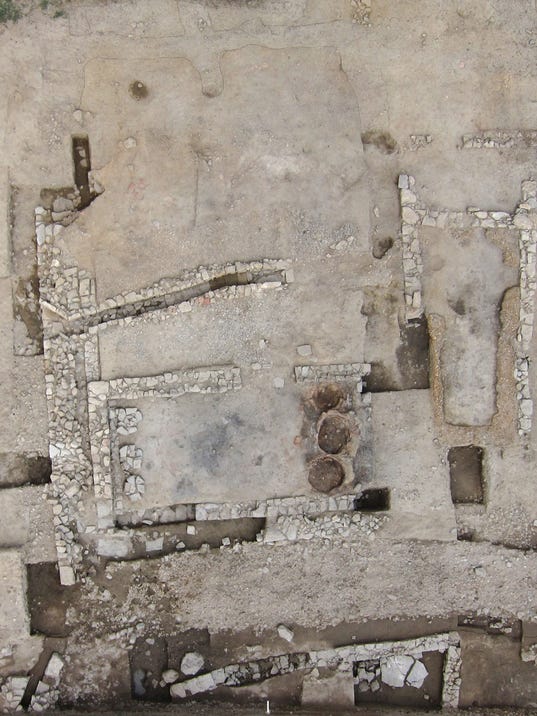
Finally a decent place to eat! Archaeologists digging in southern France have found a restaurant-like structure roughly 2,100 years old, making it one of the earliest such taverns in the western Mediterranean.

The dining complex in the ancient town of Lattara was open for business as the Romans conquered the area, bringing with them ideas that would shake up the local economy and way of life. According to the tavern’s discoverers, Lattara’s people were farmers before the Romans marched in; after the Roman takeover, new kinds of jobs likely arose – and so did dining out.

“If you’re not growing your own food, where are you going to eat?” says archaeologist Benjamin Luley of Gettysburg College, co-author of a new study in Antiquity describing the site. “The Romans, in a very practical Roman way, had a very practical solution … a tavern.”

Read the rest of this article...

Monday, February 15, 2016

Monumental Roman arcade found in Britain


It is rare to find the remains of the above-ground parts of Roman buildings in Colchester. Generally only the foundations of buildings survive and, even then, these more often than not have been partly or wholly dug up in the past to rob out the building materials which they contain. Fortunately, things are different at 97 High Street because, not only are there parts of a collapsed Roman building there, but the original structure just happens to have been something extra special – an impressive arcade of monumental proportions. 


Monumental Roman arcade found in Britain The arcade is unique in size, built in monumental proportions [Credit: The Colchester Archaeological Trust] 

The arcade was over 100 metres long and perhaps 8 metres or more in height. Its exact plan is yet to be recovered, but the arcade appears to have been made up of a square monumental gate flanked on each side by 12 or so arches to make about 24 in all. This impressive structure provided a grand entrance into the precinct of the Temple of Claudius. Both structures are unparalleled in Britain and are on a scale with buildings in Rome. A similar arcade is currently being investigated in Picardy in France, at the small town of Pont-Sainte-Maxence about 25 miles north of Paris. This arcade is of unprecedented scale in Gaul but it is significantly smaller than ours in Colchester.

Read the rest of this article...
Ancient Greek manuscripts reveal life lessons from the Roman empire

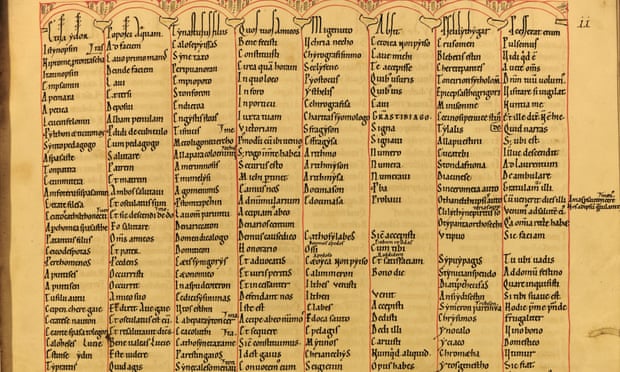
How to live, the Latin way. A 12th-century manuscript with material copied from the earlier texts – an important source for Professor Dickey in her research. 
Photograph: Zisterzienserstift Zwettl

Ever been unsure about how to deal with a drunken family member returning from an orgy? A collection of newly translated textbooks aimed at Greek speakers learning Latin in the ancient world might hold the solution.
Professor Eleanor Dickey travelled around Europe to view the scraps of material that remain from ancient Latin school textbooks, or colloquia, which would have been used by young Greek speakers in the Roman empire learning Latin between the second and sixth centuries AD. The manuscripts, which Dickey has brought together and translated into English for the first time in her forthcoming book Learning Latin the Ancient Way: Latin Textbooks in the Ancient World, lay out everyday scenarios to help their readers get to grips with life in Latin. Subjects range from visiting the public baths to arriving at school late – and dealing with a sozzled close relative.

Read the rest of this article...

Saturday, February 13, 2016

Clues about human migration to Imperial Rome uncovered in 2,000-year-old cemetery


Isotope analysis of 2000-year-old skeletons buried in Imperial Rome reveal some were migrants from the Alps or North Africa, according to a study published February 10, 2016 in the open-access journal PLOS ONE by Kristina Killgrove from University of West Florida, USA, and Janet Montgomery from Durham University, UK.

Previous work has focused on the overall human migration patterns within the Roman Empire. To understand human migration on a more granular level, the authors of this study examined 105 skeletons buried at two Roman cemeteries during the 1st through 3rd centuries AD. They analyzed the oxygen, strontium, and carbon isotope ratios in the skeletons' teeth to determine their geographical origin and diet.

Read the rest of this article...

Remains of 'extraordinary' Roman arcade found in Colchester


Ruins of the 120-metre-long Roman arcade - the largest of its kind in Britain - discovered in Colchester beneath land intended for new apartments 

An artist's impression of the frontal structure for the Temple of Claudius, named after the Emperor Claudius (inset) Photo: RMR Freelance Art/Archant/Alamy

The remains of Britain’s largest Roman covered walkway have been uncovered in one of the most spectacular archaeological finds in decades. 
The ruins of the 120-metre-long walkway, or arcade, were found in Colchester, beneath land intended for a new apartment block. 

Consisting of a covered walkway, enclosed by a line of arches on both sides, to provide shelter for pedestrians, it was built as the frontal structure for the Temple of Claudius, erected around 50 years earlier.  

Read the rest of this article...

Thursday, February 4, 2016

Rome's lonely Pyramid of Cestius gets a new lease of life


Eternal City’s only surviving pyramid dating from conquest of Egypt looks to attract more visitors after extensive clean-up funded by Japanese patron

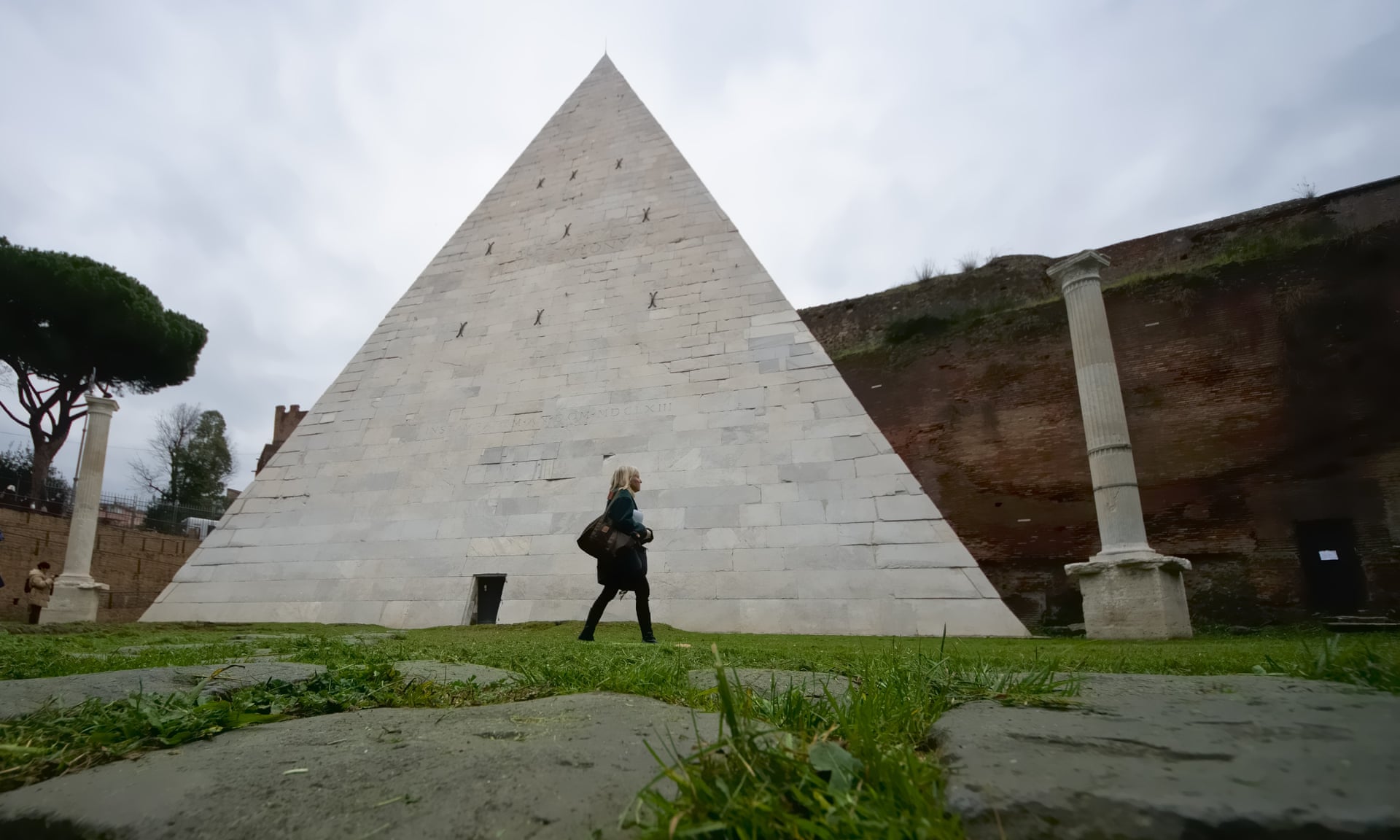
The Pyramid of Cestius in Rome is the city’s only such monument. Photograph: Domenico Stinellis/AP

Rome’s only surviving pyramid from ancient times is being put in the spotlight after a Japanese clothing magnate helped pay for an ambitious cleanup.

Archaeologists are eager to show off the monument, constructed around 2,000 years ago as the burial tomb for a Roman praetor, or magistrate, named Caius Cestius.

Read the rest of this article...

Roman fresco hidden beneath the streets of London uncovered by archaeologists


MOLA archaeological conservator, Luisa Duarte, with one of sixteen sections of a beautifully decorated collapsed Roman wall © MOLA

An ornate fresco that once adorned the residence of a wealthy Roman citizen has been discovered by archaeologists at 21 Lime Street, in London. Archaeologists from MOLA uncovered the fresco six metres below street level, whilst undertaking fieldwork for a new office development. Dating to the late 1st century AD, and the first decades of London, it is one of the earliest surviving frescos from Roman Britain.

Thanks to a huge Roman construction project, the fate of this rare wall painting was literally sealed in the ground. In AD 100, construction of the 2nd Forum Basilica, the main civic centre for the city and the largest Roman building ever built north of the Alps, began. In advance of construction of the Forum the area was flattened. The painted wall was deliberately toppled and the Forum immediately built over it, incredibly preserving the fresco for nearly 2000 years.

Read the rest of this article...
Kilnwood, Vicarage Hill


This report has been reproduced by TimeTeign to help enhance our understanding of the early occupation and history of Kingsteignton during the early/late Bronze Age and into the Roman occupation around this hill-site. The report itself was made in relation to the construction of forty (40) dwellings on the Kilnwood estate, on Vicarage Hill, Kingsteignton, Devon, has been approved and passed by Steve Reed, at Devon County Council. 

The site is situated to the southeast of the historic core of Kingsteignton within an area that was covered by the former mediaeval field systems. Remnants of these survived as parts of the existing field system and as previously-recorded lynchets to east and southeast of the site.
Read the rest of this article...

Wednesday, February 3, 2016

The discovery of an ornate Roman fresco revealed


An ornate fresco that once adorned the residence of a wealthy Roman citizen has been discovered by a team of our archaeologists at 21 Lime Street, in London. We uncovered the fresco six metres below street level, whilst undertaking archaeological fieldwork for a new office development. Dating to the late 1st century AD, and the first decades of London, it is one of the earliest surviving frescos from Roman Britain.

Roman building boom

Thanks to a huge Roman construction project, the fate of this rare wall painting was literally sealed in the ground. In AD 100, construction of the 2nd Forum Basilica, the main civic centre for the city and the largest Roman building ever built north of the Alps, began. In advance of construction of the Forum the area was flattened. The painted wall was deliberately toppled and the Forum immediately built over it, incredibly preserving the fresco for nearly 2000 years.


Read the rest of this article...

Stash of Roman coins found at UK building site


A groundwork contractor stumbled across 1,700-year-old Roman coins when he was working in Yeovil. 


Stash of Roman coins found at UK building site Selection of Roman coins discovered at the Yeovil building site [Credit: Central Somerset Gazette] 

Mark Copsey, who had been working on a building site for under a week, went to reverse the bulldozer he was driving and saw something strange in the soil, an inquest heard. 

"I was stripping sub soil and I looked behind and noticed a green cloth," he said. 

Mr Copsey got out of the bulldozer to investigate and discovered a broken pot and some coins on March 20, 2013.

Read the rest of this article...

Monday, February 1, 2016

Decapitated Gladiators Reveal Roman Empire's Genetic Influence


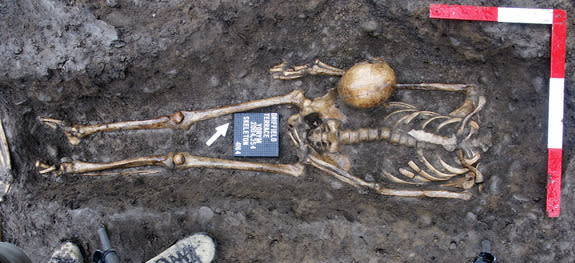
These decapitated remains found in York belonged to a male who may have been a Retiarii gladiator, who fought with a net and spear or trident.

DNA from seven decapitated skeletons thought to be gladiators is helping researchers unravel the gruesome origins of the ancient remains. The new findings suggest that the Roman Empire's genetic impact on Britain may not have been as large as researchers had thought.
The headless skeletons were excavated between 2004 and 2005 from a Roman burial site in Driffield Terrace in York, England, the archaeologists said. Around the time the bodies were buried, between the second and fourth centuries A.D., the area that's now York was the Roman Empire's capital of northern Britain, called Eboracum. The cemetery where the bodies were discovered was located in a prominent area, near a main road that led out of the city, according to the researchers.
Most of the skeletons found at this site were of males younger than 45 who were taller than average and showed evidence of trauma, such as cuts to their arms and fingers, the archaeologists said. Famously, the majority of them had been decapitated. These standout traits led some experts to suggest that this was a burial site for gladiators. However, it is also possible that these men were in the military, which, in Roman times, had a minimum height requirement, the researchers said. [See Photos of the Decapitated Gladiator Skeletons]
Read the rest of this article...

Thursday, January 28, 2016

Digger driver wins share of 3,339 Roman coins he found levelling a hockey pitch


Mark Copsey, 44, is entitled to a third of their worth after they were declared treasure under the Treasure Act

Roman coins found by bulldozer driver Mark Copsey while working on a Yeovil Recreation Ground in Somerset Photo: British Museum/SWNS

A JCB driver who dug up 3,000 rare Roman coins which he put in a carrier bag will be able to keep the cash despite colleagues claiming it was a team find.
Mark Copsey, 44, was levelling a recreation ground for a hockey pitch when he spotted something in the soil.
He found a collection of 3,339 silver coins carrying depictions of an elephant and a hippopotamus buried around 270AD.
Mr Copsey immediately scooped them up and put them in a plastic carrier bag - and an inquest has ruled he will now be entitled to a third of their value.
Read the rest of this article...

Excavation Reveals Significant Statuettes at Archaeological Site of Aptera


A very important find was unearthed at the archaeological site of Aptera, Chania on Crete, Greece.
Two small sized sculptures (approx 0.54cm height), one of Artemis made of copper and a second of her brother Apollo made of marble. The statue of Artemis, guardian goddess of Aptera, is in excellent condition and was standing on a square copper base. She is wearing a short chiton, or tunic, and is ready to shoot her arrow. The preservation of the white material used for the iris of her eyes is spectacular.
Read the rest of this article...

Roman-Byzantine grave unearthed on Istanbul’s İstiklal Avenue


Archaeologists have uncovered a Roman-Byzantine grave underneath Istanbul’s famous İstiklal Avenue, providing evidence of human activity in one of the city’s most important areas at a date earlier than previously thought.

The grave was unearthed during the restoration of the historic Casa Garibaldi building on the avenue when a worker discovered a 1,600- to 1800-year-old skull eight meters under the surface. 

Archaeologists from the Istanbul Archeology Museum subsequently arrived and conducted excavations in the area. 


Read the rest of this article...

Discovering a Roman Imperial Winery at Vagnari (Italy)


Vagnari is situated in the Basentello river valley, just east of the Apennines in Puglia (ancient Apulia), and about 12 km west of the Iron Age town of Botromagno (next to modern Gravina).

After the Roman conquest of south-east Italy in the early third century B.C., Rome had direct links to the region by one of its main roads, the Via Appia. Pre-Roman settlements, such as Botromagno, went into decline from this time, and its land may have been confiscated by the Romans. After the conquest, wealthy Romans of the senatorial class appropriated tracts of Apulian land, and emperors later followed suit, acquiring properties and developing imperial business assets here.

Read the rest of this article...

Statues depicting Artemis and Apollo found in Crete


A very important find was unearthed at the archaeological site of Aptera, Chania on the Greek island of Crete. 


Bronze statue depicting Artemis [Credit: Greek Ministry of Culture] 

Two small sized sculptures (approx 0.54cm height), one of Artemis made of copper and a second of her brother Apollo made of marble. 

The statue of Artemis, guardian goddess of Aptera, is in excellent condition and was standing on a square copper base. 

She is wearing a short chiton, or tunic, and is ready to shoot her arrow. Extremely spectacular is the preservation of the white material used for the iris of her eyes.

Read the rest of this article...

Un sanctuaire gallo-romain à Marne-la-Vallée


En 2013, un vaste diagnostic archéologique (110 ha) a été mené sur l'emprise du projet d’un centre de villégiature conçu par Euro Disney et le groupe Pierres et Vacances-Center Parcs. Dans l'angle nord-ouest du diagnostic, Alain Berga et son équipe ont mis au jour de longs fossés qui ont livré un important mobilier archéologique gallo-romain auquel étaient mêlés des ossements humains brûlés. Ces indices laissaient présager la présence d'une nécropole. C'est donc dans ce secteur, sur une superficie d'un hectare, qu'une fouille a été menée. 

Trois enclos et un temple
Le terrain à fouiller était recouvert par un épais remblai composé de boues de station d'épuration et de terres rapportées pouvant atteindre un mètre d'épaisseur. Situé en contrebas du chantier, il recevait toutes les eaux d'écoulement des alentours.


Read the rest of this article...